
There are many discrepancies about the definition of a “book” but if you mean a collection of pages bound together between a front and back cover, then the oldest book in the world with its pages and cover intact is Golden ‘Etruscan’ Orphic Book and dates back to 600BC.
It’s also amazing that this book beside to have pages of paper as modern books do, its pages and cover are made of 23.82-carat gold and the quality of the work of the craftsman who made this book indicates the advanced goldsmith techniques used by the Etruscans.

It contains six bound sheets, with text and illustrations of a horse-rider, a male horse with deer horns with and a bird, a griffin ( is a legendary creature with the body, tail, and back legs of a lion; the head and wings of an eagle ) two warriors.
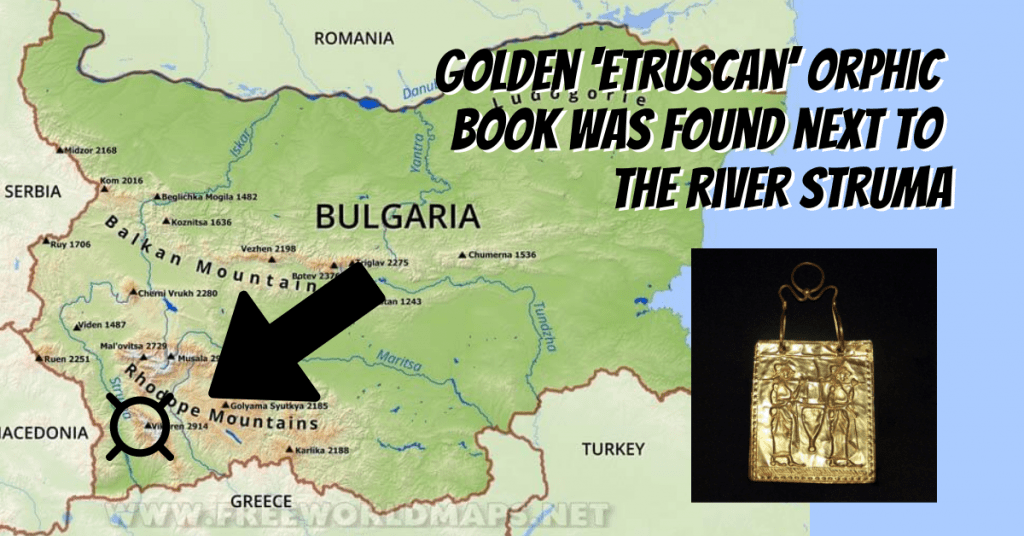
The small manuscript is 5 centimeters in length and 4.5 centimeters in width, with a total weight of 100 grams, and is more than two-and-a-half millennia old, was discovered around 80 years ago in a tomb uncovered during digging for a canal along the Strouma river in south-western Bulgaria.
What was doing an Etruscan artifact in Thracian lands at that time?
The precious artifact probably reached what is now the territory of modern Bulgaria through antic trade channels. The text and especially the images indicate the book was made for the funeral of an aristocrat who was an adept of the Orpheus cult.
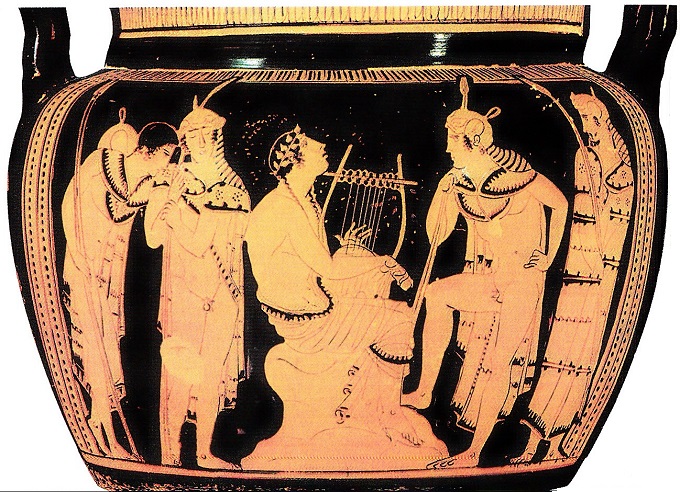
Part of the Thracians practiced the so-called Thracian Orphism – teaching related to the cult of Orpheus and followed by the aristocracy, organized in mysterious male societies.
In the roots of Thracian Orphism stood the idea of self-perfection and the system functioned on two levels: aristocratic (doctrinal) and popular (social).
Thracian Orphism combined the cult of the Earth and the cult of the Sun, personified by Orpheus and Zalmoxis.
Whats is the meaning of the text of the Etruscan Golden Book?
Etruscan was written in an alphabet derived from the Greek alphabet; this alphabet was the source of the Latin alphabet, but unfortunately, the problem has been to decipher the exact meaning of the words and their grammar, the Etruscan language stop been used when the Romans conquer during the 4th century BC.

But the experts from the National History Museum in Sofia are working with another studious of the Etruscan culture from all over the world with the goal of deciphering the meaning of this magnificent artifact.
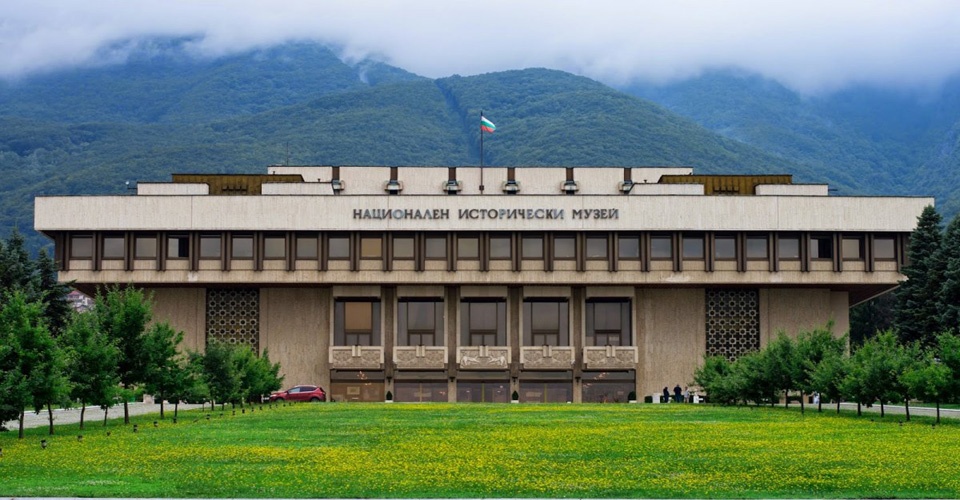
How the Golden book finally ends up at the National History Museum in Sofia?
Back in 2003, a Bulgarian who lived in Macedonia presented the museum with a unique artifact on the condition of anonymity.
The donator said that he came across the book in the valley of Bulgarian Struma River in 1943 in a tomb while workers were digging a canal during road construction works. The benefactor discovered it in an ancient tomb with frescoes – a piece of which depicting a warrior he took with him. This fragment was also donated together with the gold book.
You can see the Golden Book at The National History museum
Working Hours
Without a day off. The museum does not work on public holidays – January 1, Easter (Sunday), 24 and 25 December.
Summer hours (April-October):9:30 to 18:00 pm. The ticket office closes at 17:15.
Winter hours (November to March):9:00 to 17:30 pm. The ticket office closes at 16:45.