

I still remember my first time in Bulgaria, going down from the airplane in Sofia airport, I saw the Bulgarian letters and right away I realized that wasn’t going to be easy…. People still looks the same than everywhere, things looks the same than in any other country, but as soon as you talk to the first person you realize that isn’t the same.
and you can’t understand and word what they say, you hear sounds coming from their mouths but nothing that you could hardly understand and that was my first contact with the Bulgarian alphabet.
You hear it right, Bulgarian alphabet is not Russian alphabet, and be aware that the Alphabet is a national pride for Bulgarians together with the Martenitsa and Easter celebrations, so don’t expect Latin script is taking over anytime soon.
Even in Bulgaria the 24th of May is a national holiday to celebrate “The day of the Bulgarian Letters” dedicated to Cyril and Methodius, and the Bulgarian alphabet or българска азбука.
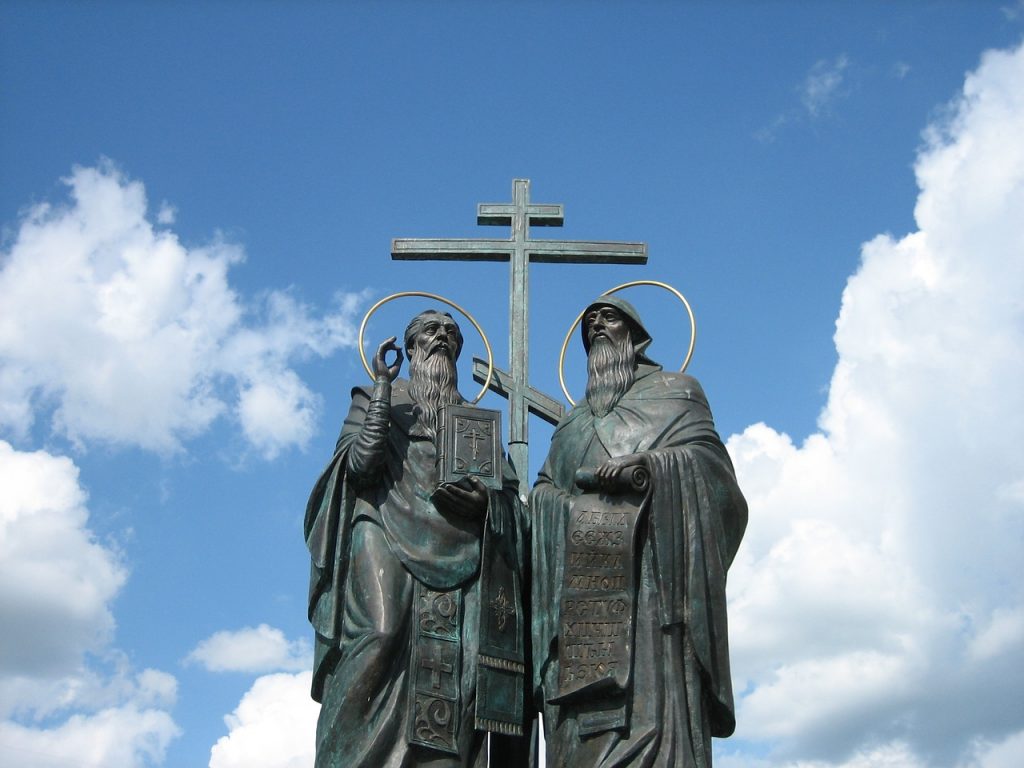
Cyril and Methodius
History of the Bulgarian Alphabet
During the First Bulgarian Empire, was commissioned and introduced the Bulgarian alphabet, back in the 9th century AD.
Bulgarians are proud to use the Cyrillic alphabet because it’s the most significant geopolitical project of the then powerful Bulgarian kingdom. It allowed spreading Bulgarian influence across the Slavic world, mostly through religious writings.
Cyrillic alphabet as we now know it was invented by disciples of St. Cyril and St. Methodius in the Bulgarian Kingdom around the 10th or 11th century. Before that, the Glagolitic script was used, which was harder to write but described pretty much the same alphabet concerning the number and meaning of letters.

The Glagolitic and the Cyrillic alphabets were created pretty much specifically to match the Slavic language that later evolved into Bulgarian and other languages of the area.
First Bulgarian empire commissioned and introduced in the 9th century AD. The two brothers, born in Thessaloniki, created the Glagolitic and then the Cyrillic script with the aim to have the Bible and other texts translated into Slavic languages.
Meanwhile, the Bulgarian king Boris I saw the adoption of the old Slavonic language as a way to preserve his country from Byzantine influence. He created schools where thousands of disciples taught in the Slavonic language and the new alphabet. The reign of Boris I from 852 to 889 was also marked by the Christianization of Bulgarians.
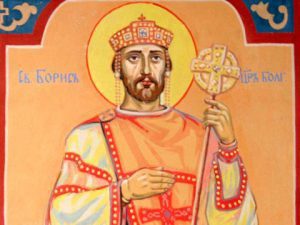
Bulgarians are proud to use the Cyrillic alphabet because it’s the biggest geopolitical project of the then powerful Bulgarian kingdom. It allowed spreading Bulgarian influence across the Slavic world, mostly through religious writings.
Modern Bulgarian Alphabet
The last major orthographic reform was of 1945. Then the letters Ѣ, ѣ (called ят “yat”) and Ѫ, ѫ (called Голям юс “big yus”), were also removed from the alphabet, reducing the number of letters to 30. This orthographic reform in practice introduced the phonetic principle and brought written language closer to contemporary pronunciation.