

Rakia is the term for fruit brandies popular in the Balkans and the southeast of Europe; each and every one of the countries in the Balkan Peninsula considers the distillate as their national drink.
Although it is a single spirit, the rakia is produced differently according to regional traditions, local raw materials, distillation methods and legislation of each particular territory. The alcohol content of rakia is normally 40% ABV, but home-produced rakia can be stronger (typically 50%).
The first signs of Rakia production in Bulgaria date from the 11th Century fragment of a distillation vessel used for the production of rakia. Due to the age of the fragment, contradicts the idea that rakia production only began in the 16th century, some historians believe this finding indicates that rakia did originally come from Bulgaria.
Kinds of rakia
In Bulgaria, they are categorized into two main groups: grape rakia and another fruits rakia, usually made with plums, but also with apricots, quince, pear, peaches, and even wild red fruits., by far the most common are made from:
Grape:
The grape rakia is also subcategorized according to the method used for its manufacture. The local legislation differentiates those made from the distillation of fermented grape musts, those of grape juice and/or grape skins.
Traditionally very aromatic white strains are used, such as Muscat, Sauvignon Blanc, Dimyat and different varieties of Misket. In the particular case of wine rakia, in Bulgarian, the drums are called “dzhibri” (джибри) the fermented must is distilled in copper stills to obtain a spirit with at least 65 percent alcohol, very rich in fruity, herbaceous, spicy, floral aromas.
Fruit Rakia:
These fruits are mostly used because of its large amount of sucrose, which is the main ingredient to obtain ethanol. And normally in Bulgaria are used apricots, plums, peaches, and pears. The process of these fruits before they become brandy goes through the phases of harvesting, washing, grinding, fermentation, distillation, and aging.
It is normally colorless unless you add herbs or other ingredients that give color.
Some types are stored in wooden barrels (oak or cherry), obtaining a more golden and aromatic liquor.
The Ritual of Rakia
Rakia is an important beverage for life, health, and death in Bulgaria and in many of the Balkan countries its not unusual to incorporate the beverage in different rituals.
During the end of the Orthodox Christian burial, visitors are offered a piece of bread and rakia, they drink for the soul and spill some rakia on the ground and say out loud “For peaceful rest of the soul” and drink the rest of the rakia. During the ceremonies of weddings its a custom for the groom´s father to walk around the tables and offer a glass of rakia to all of the guests.
Rakia is believed to have healing powers. If you have a glass of rakia every day it will keep you healthy.
In any case, you can always have rakia to cure you. If you suffer from a cold you shall sleep with a scarf covered in rakia, and the next morning you will be good again.

When and how to drink rakia?
Rakia is served as an appetizer, rather than as a digestive (like similar strong beverages in Italy or France, for example). A good way to drink it is in the company of fresh Shopska Salad. Some Bulgarians prefer to pour water into it, especially if it is homemade, which usually means stronger. Anyway, most Bulgarians skip the water. However, it is important to know that drinking homemade rakia without water is not for the weak.
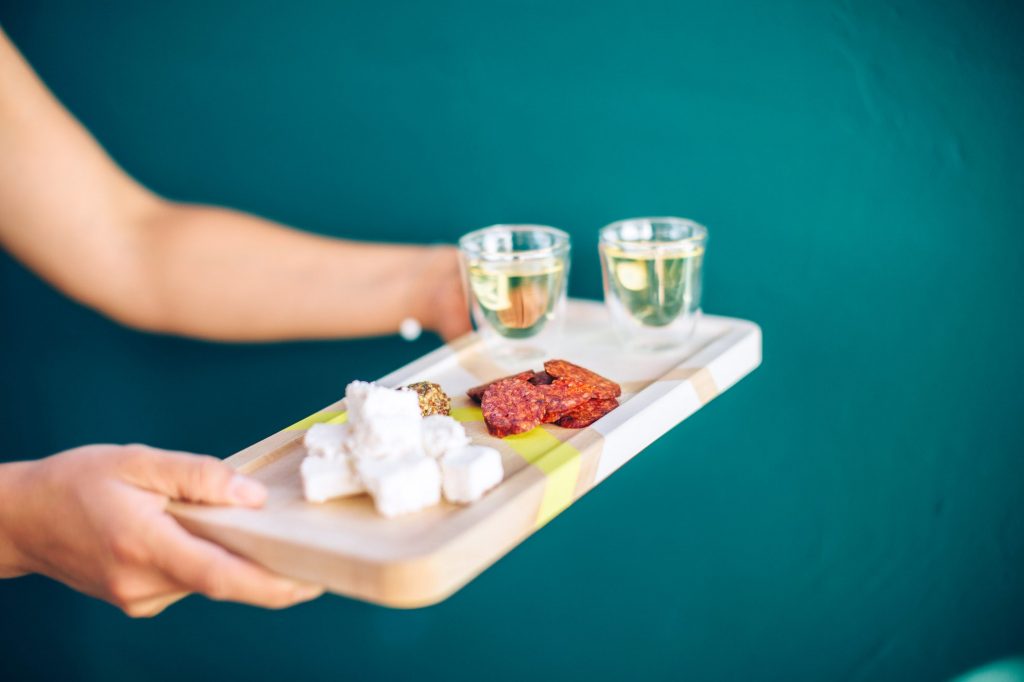
In summer, rakia should be cooled, while in winter it can be heated with honey and black pepper. Be prudent when you drink Rakia, it’s known that Bulgarians are big drinkers, and it is not a good idea to try to drink as much as they do.
The distillation of homemade rakia
The tradition of Bulgarians making their own rakia is ancient, with many treating it as an essential part of the national identity. many Bulgarians enjoy homemade rakia. The custom of boiling the drink at home has survived the widespread availability of industrial alcohol distilleries.

Generally, there is two rakia making sessions during the year. The plum rakia making season takes place from August to September and the grape rakia making season takes place from the end of September to the end of November.
Rakia recipes are centuries old and each part of Bulgaria has its own variety and secret ingredients. You can find rakia recipes that contain anise, herbs, honey, walnuts, mint, sour cherries, etc. Sometimes rakia is mixed with herbs, honey, sour cherries (then it becomes vishnovka) or walnuts after distillation and it takes on a dark color. Needless to say, every time the result is exquisite and the experience is unique.
Хайде Наздраве!
Sources:
https://svetdimitrov.com/rakia/
https://www.findbgfood.com/rakia
https://en.wikipedia.org/wiki/Rakia
http://archaeologyinbulgaria.com
http://windowtobulgaria.blogspot.com/2013/01/how-to-make-rakia.html