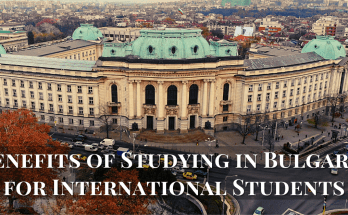

Bulgaria geography is at a crossroad between Europe and Asia, because of this during its history has inevitably bеen an immerse in battles, conquests, and wаrs.
since immemorial times different cultures have been interested in these rich lands, Romаns conquered Thrаcians, later Bulgarians fought Byzantines, Ottomаns fendеd off wеstern crusaders, and later Bulgarians recover their lands back.
As a result, throughout the agеs and empires, majestic fortifications cities, and fortresses popped up throughout the Bulgarian lands.
Tsarevets fortress

Is a medieval stronghold located on a hill with the same name in Veliko Tarnovo in northern Bulgaria. Tsarevets is 206 meters (676 ft) above sea level. It served as the Second Bulgarian Empire’s primary fortress and strongest bulwark between 1185 and 1393, housing the royal and the patriarchal palaces, and it is also a popular tourist attraction.
Thracians and Romans used it as a defensive position, but the Byzantines built the first significant fortress here between the 5th and 7th centuries AD. The fortress was rebuilt and fortified by the Slavs and Bulgars between the 8th and 10th centuries, and again by the Byzantines in the early 12th century. When Târnovgrad became the Second Bulgarian Empire’s capital, the fortress was truly magnificent, but it was sacked and destroyed with the Turkish invasion in 1393.
Baba Vida Fortress

is a medieval fortress in Vidin in northwestern Bulgaria and the town’s primary landmark. It consists of two concentric curtain walls and about nine towers of which three are preserved to their full medieval height, including the original battlements, and is said to be the only entirely preserved medieval castle in the country.
At the northern end of the park lining the Danube, the Baba Vida Fortress is a 17th-century Turkish upgrade of 10th-century Bulgarian fortifications, which in turn were built upon the ruins of the 3rd-century Roman fort of Bononia.
Ovech Fortress
The Ovech Fortress is one of the oldest in Bulgaria. The area is full of historical landmarks. Nearby are Veliki Preslav (the city was the capital of the First Bulgarian Kingdom) and near is also the Madara Rider. The view from the fortress is unique, the whole city of Provadia is visible.
The fortress is mentioned under different names in the historical chronicles. The oldest one is the Byzantine name Provat. Bulgarians referred to it as Ovech, while Turks called it Tash hisar (which translates from Turkish as a stone fortress). Archaeological research established that the fortress was used in periods from the 3rd century to the first decades of the 7th century, and then from the 10th-11th centuries until the end of the 17th century.
The fortress was inhabited successively by Thracians, Romans, Byzantines, Bulgarians, and Turks. It is related to the reign of Tsar Ivaylo (1277 – 1280), the crusade of Amadeus IV, Count of Savoy (1366), and the crusade of Vladislav Varnenchik (1444).
Kaliakra fortress

Set on the steep cliffs rising 70 metres above the depths of the Black Sea, the scenic fortress of Kaliakra may have been briefly been the capital of the independent Principality of Dobruja in the 14th century.
If you go through the castle gate and reach the very end of the headland, you’ll discover a picturesque Orthodox rock chapel.
Probably the most popular legend about the place is one about 40 Bulgarian girls, who preferred to tie their hair together and jump into the Black Sea rather than face the prospect of being captured by the Ottomans. An obelisk dedicated to this legend is placed at the entrance to the cape, called The Gate of the 40 Maidens.
Belogradchik Fortress

was originally built by the Romans and later expanded by the Byzantines, Bulgarians and Turks. Most of what you see today was completed in the 1830s. You can wander round three courtyards and explore the defensive bunkers; accessing the highest rocks involves a precarious climb up steep ladders. The fortress lies about 1km west of the centre of Belogradchik.
It is one of the best-preserved strongholds in Bulgaria and a cultural monument of national importance.
Shumen Fortress
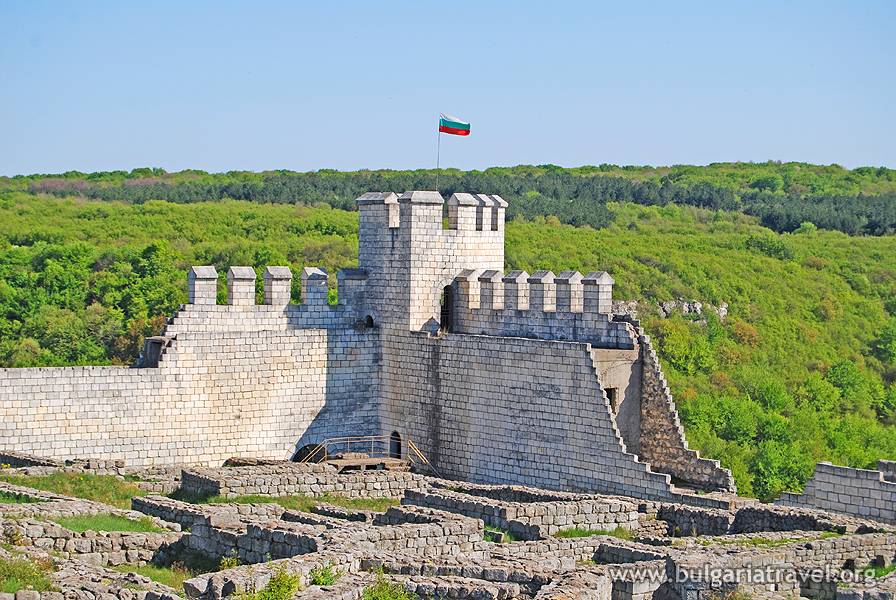
The remains of the fortress are 3 kilometres away from the centre of modern-day Shumen. The fortress is situated in the Shumen Plateau.
Shumen Fortress was probably first built by Thracians and was later completed and reconstructed by Romans, Byzantines, and Bulgarians. It is believed that the first fortification built in this place is 3200 years old, which makes it one of the oldest fortifications in Bulgaria. Conquered and demolished many times, Shumen Fortress rose to new life and existed until 1444.
The remains of the fortress are perhaps some of the most thoroughly studied ancient remains on the territory of Bulgaria. Research provided important information about the way of life and the military customs of Bulgarians during the Middle Ages. The remains of 12 churches, as well as an ancient Roman bath, pottery, vessels, adornments, and coins, were found.
Mezek Fortress

The Mezek Fortress, is 6,500 square meters in area, is claimed to be among the best-preserved Bulgarian medieval castles.
It dates to the 11th century. Along with the Thracian tombs, it was studied by a team under archaeologist Bogdan Filov in 1931–1932.
The castle has nine towers, five of which lie at the vulnerable south wall. The Mezek Fortress was built out of stone, with two decorative lines of bricks on the outside. It suffered some destruction around 1900 when stones from the fortress were used for the construction of Ottoman barracks in Svilengrad.
Castra Maris Fortress
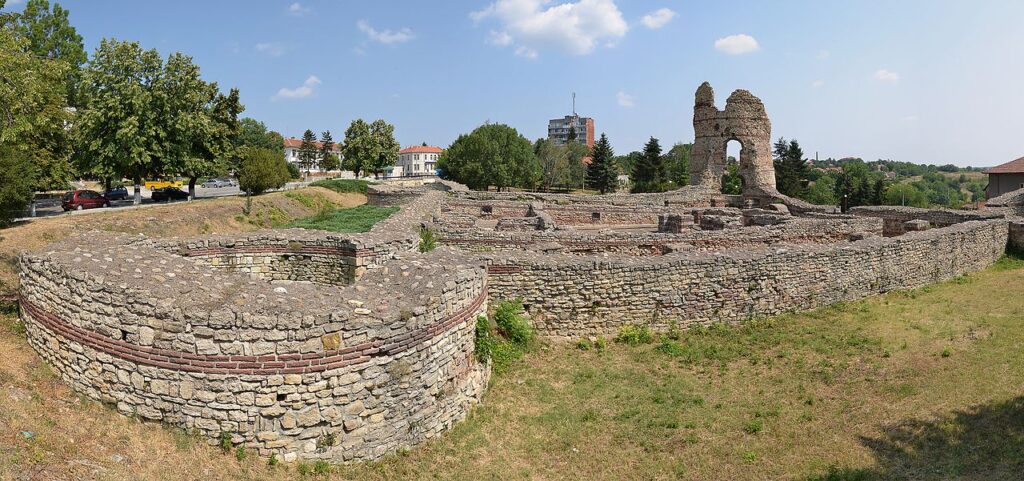
named after the Roman god of war Mars, on the modern site of Kula (Latin/Italian Cula), in Vidin Province in northwestern Bulgaria, served to protect the road through Vrashka Chuka pass in the western Balkan mountains.
It was important enough in the Roman province of Dacia ripensis to become a suffragan of the provincial capital’s Metropolitan Archdiocese of Ratiaria, in the way of the Patriarchate of Constantinople.
Assen’s Fortress
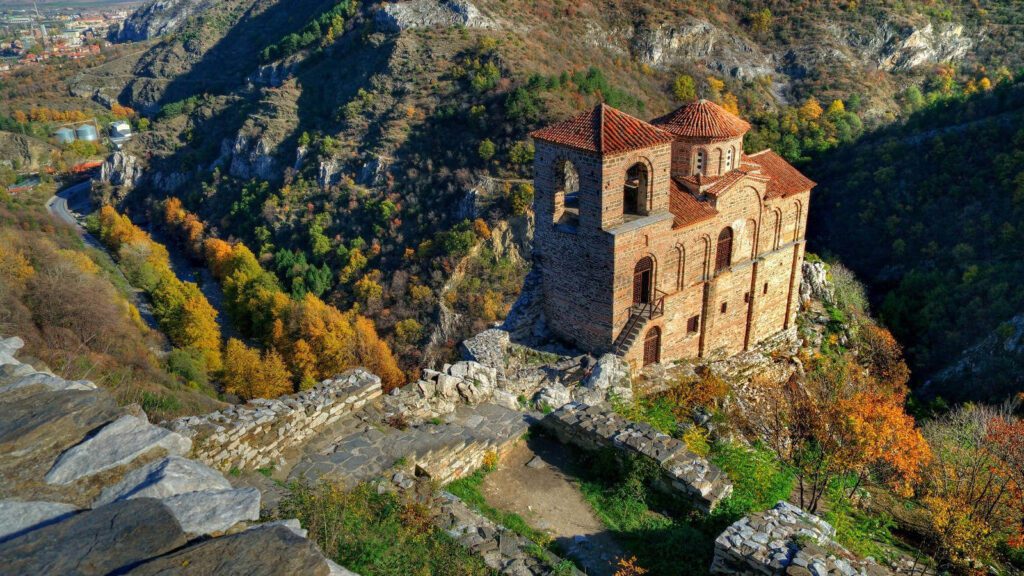
The fortress has existed since the time of the Thracians, and during the Middle Ages was a main strategic point. The fortress is named after king Ivan Asen II. The church St Bogoroditsa Petrichka (Bulgarian: Света Богородица Петричка) is the only wholly preserved building in the complex. In 1991 after a full restoration of the church, it begins to function as an orthodox temple.
The fortress is among the top 100 National tourist sights of Bulgaria and it is open during the entire year to visitors. Thousands of people and tourists walk to the top daily to take photographs, to relax, and to see the beautiful view.
Cherven fortress

The fortress was Byzantine from the 6th century, but the area has been inhabited since the arrival of the Thracians. Cherven was first mentioned in the 11th century in an Old Bulgarian apocryphal chronicle. It gained importance after 1235, when it became the seat of the medieval Bulgarian Orthodox Bishopric of Cherven. It was affected by the Mongol Golden Horde raids in 1242 and was briefly conquered by Byzantine troops during the reign of Tsar Ivailo (1278–1280).
The town had a complex fortification system and was completely built up. Cherven grew to become a center of craftsmanship in the 14th century, with iron extraction, ironworking, goldsmithing, construction, and arts being well developed. The town was an important junction of roads from the Danube to the country’s interior, which also made the town a key center of trade.
Cherven was conquered by the Ottoman Turks in 1388 during the Bulgarian-Ottoman Wars, initially retaining its administrative functions but later declining in importance.
We hope you enjoy this article and will find a way to visit some of this interesting Bulgarian landmarks.
Similar topics:
Get Your eBook With All The Answers That You May Need!
Does Bulgaria Have Islands?
The Mystery of Varna Gold, The Oldest Gold in The World
How to Register a Company in Bulgaria in 5 Easy Steps!
If you enjoy the article, share it, and Follow us on Facebook!