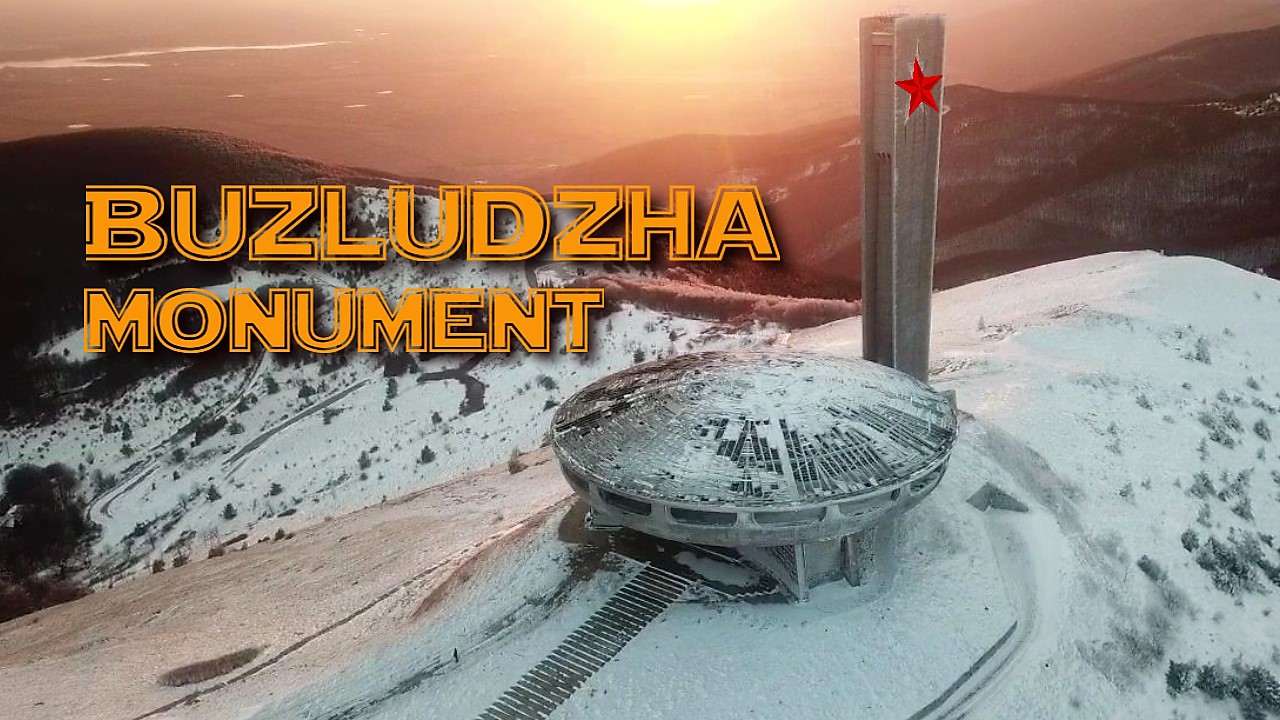
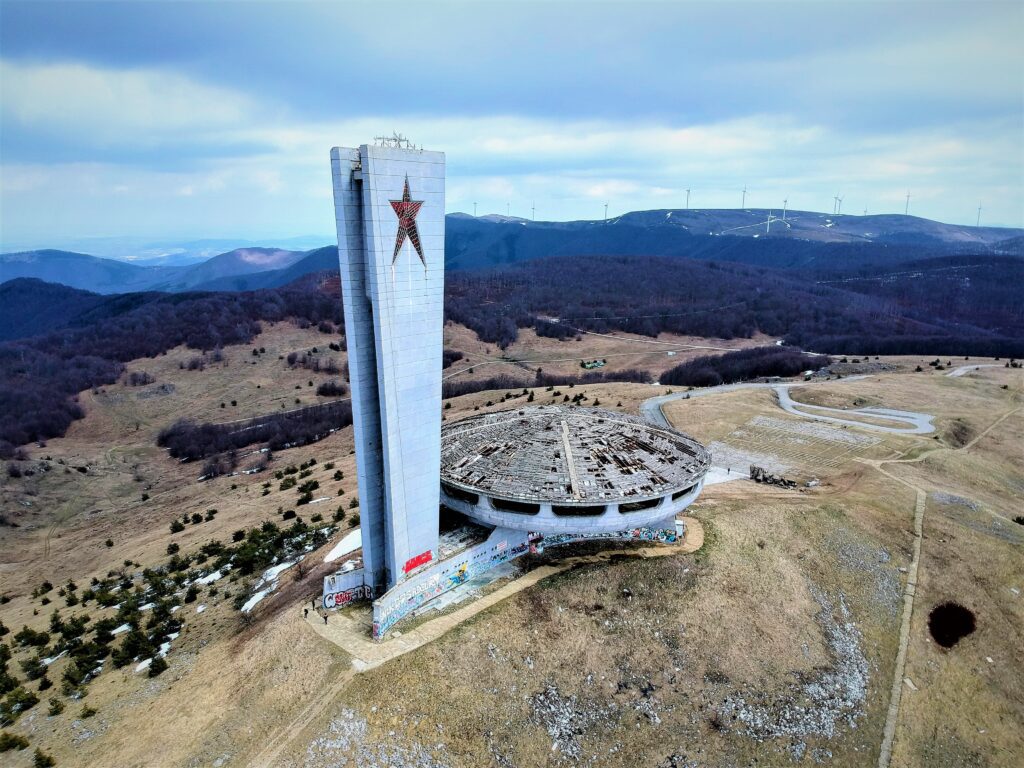
The Buzludzha Memorial House was opened in August 1981, commemorating a location with great significance in Bulgarian history. Three key historic events are linked to this mountain peak: the 1868 death of Hadzhi Dimitar, a WWII-era battle between fascists and partisan forces, and most significantly, the foundation of the Bulgarian Social Democratic Workers Party in 1891.
The main architect of the project was Georgi Stoilov, and his idea was to create a monument that could become timeless, by incorporating both ancient and futuristic motifs into his design. He lists both the Roman Pantheon and the sci-fi films of the 1950s amongst his inspirations for Buzludzha.
The circular form appealed to him also as it seemed to symbolize infinity, and thus echoed the popular communist theme of building an eternal future; eternal glory.
The monument exemplifies the futurist architecture common to many state-constructed communist buildings.
The official inauguration of the monument in 1981 coincided with the opening of several other impressive monuments. Most notably, the National Palace of Culture in Sofia and the monument ‘1300 years’ in Shumen. All of this was part of the official plan of the culture minister at that time (Ludmila Zhivkova) to commemorate the 1300 years anniversary since the creation of the first Bulgarian state.
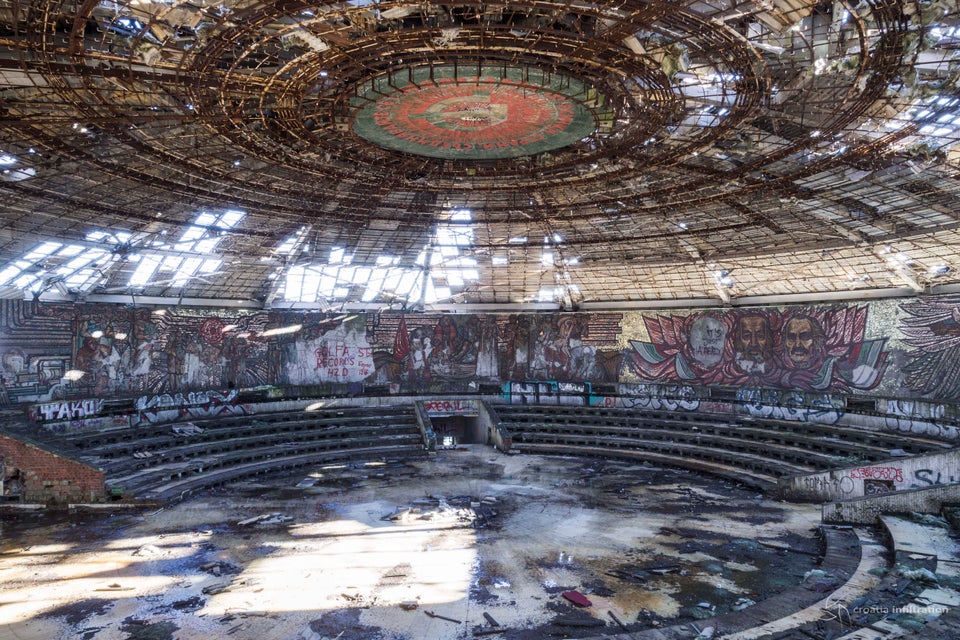
Interior and mosaics
The interior of the monument was covered in richly detailed mosaics, which depicted the history of the Bulgarian Communist Party. Notable scenes featured the faces of international communist heroes – Marx, Engels and Lenin, as well as their Bulgarian counterparts. The struggle of the working class, notable deeds, space travel, warfare, and communist workers images are also present. Probably the most emblematic piece was the one at in the center of the dome that consisted of a sickle and hammer and a quote from The Communist Manifesto: “Proletarians of all countries, unite!”
All maintenance ended with the fall of communism in 1989 as it represented the previous communist regime.
The building remains closed to the public due to the hazards of the weakened structure.
The Buzludzha Project has helped to begin work on the monument’s preservation, with the eventual aim of creating an interpretation center for Bulgarian history.
Today it is a symbol of a conflict between people holding different views about the recent past.
The monument is in desperate need of a refurb, and in 2018 was named one of the seven most endangered heritage sites in Europe, by the heritage organization Europa Nostra.
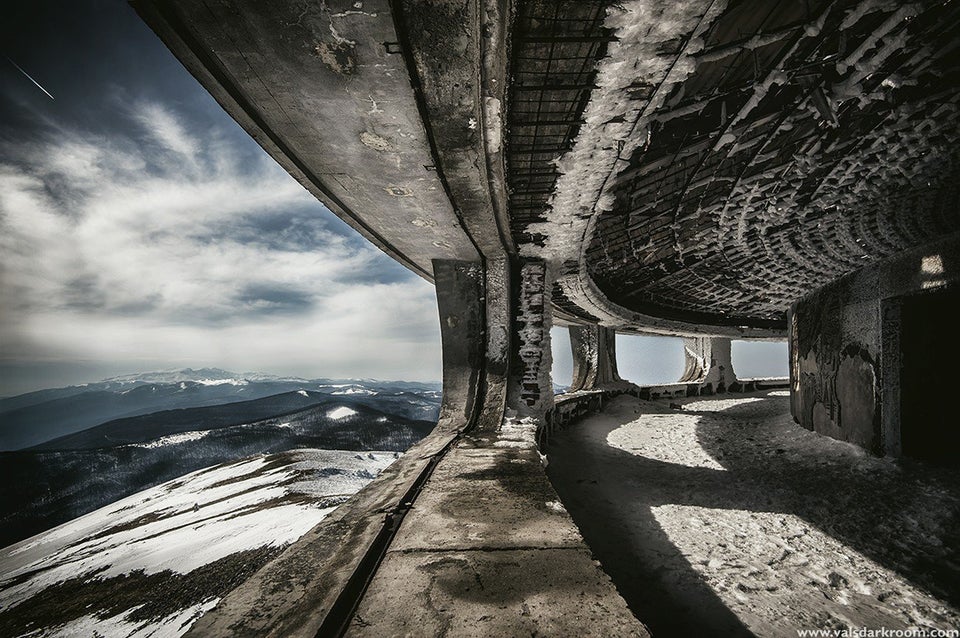
The Getty Foundation has pledged $185,000 towards its conservation, which includes evaluation of the building’s structural condition, how it can be re-used, and the development of a new business model for the site. The monument’s original architect, Georgi Stoilov, will also play a role in the project. There’s no word on when the building could re-open to the public.
In the surroundings you can also visit the Monument to Freedom and the Shipka memorial Church, which make it an excellent excursion when you are in the area.
Similar topics:
Get Your eBook With All The Answers That You May Need!
Does Bulgaria Have Islands?
The Mystery of Varna Gold, The Oldest Gold in The World
How to Register a Company in Bulgaria in 5 Easy Steps!
If you enjoy the article, share it, and Follow us on Facebook!