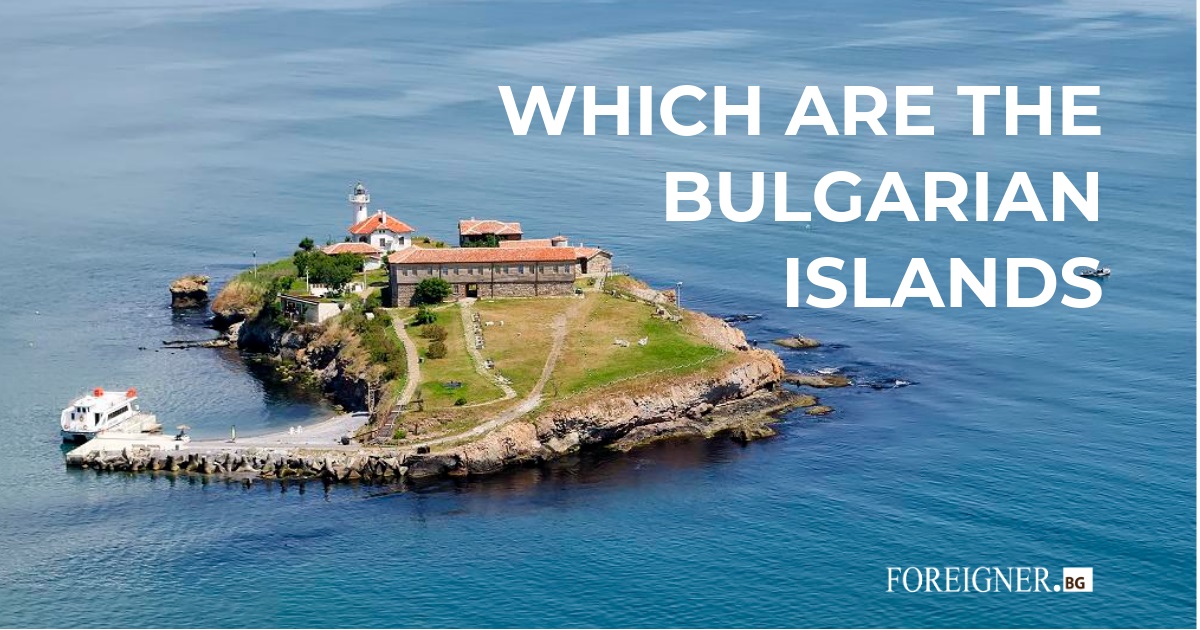
And the answer is Yes, it has!
And many of them can be visited, whether it is on the Black Sea or on the Danube river we can find some islands that aren’t just natural beauty, but also some of them have thousands of years of history, from churches, fortress and even prisons we can find in the Bulgarian islands.
The eastern border of Bulgaria is the Black Sea also known as the Bulgarian Riviera, which covers the entire eastern bound of Bulgaria stretching from the Romanian border in the north to the border with Turkey in the south, along 378 km of coastline.
White and golden sandy beaches occupy approximately 130 km, many of us have the chance to visit the beautiful beaches and enjoy magnificent sunrises looking into the sea.
But did you know that Bulgaria has 5 islands in its territorial waters near the coast in the Black Sea?
And did you know that all the islands have a saint’s name?
St. Ivan Island
is the largest Bulgarian island in the Black Sea, with an area of 0.66 square kilometers (0.25 square miles). It lies off the Bulgarian Black Sea Coast near Sozopol, and is separated by a strait several hundred meters long from the small neighboring St. Peter Island.
Standing at 33 meters (108 feet) above sea level, it is also the highest of the Bulgarian sea islands. It lies 920 meters (0.57 miles) from the Stolets peninsula, the location of Sozopol’s Old Town.
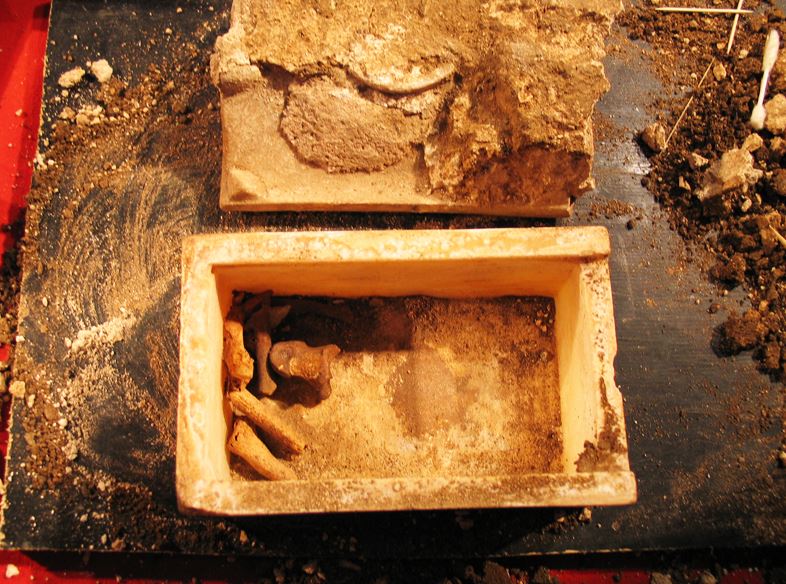
In August 2010, during excavations of an ancient monastery on island St. Ivan (St. John) near Sozopol, Bulgarian archaeologist Prof. Kazimir Popkonstantinov discovered a reliquary containing relics of St. John the Baptist.
St. Peter Island
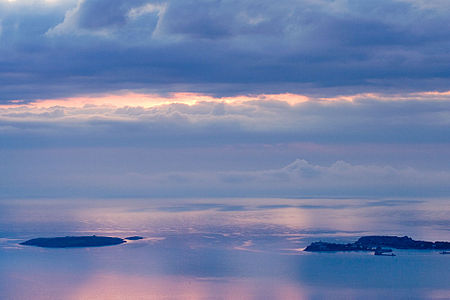
It is an island in the Black Sea, with an area of 0.025 square kilometers (0.010 square miles) and a height of 9 meters (30 feet) above sea level. Also known as Bird Island, it is located in the Bay of Sozopol, close to the St. Ivan and St. Cyricus Islands.
As it was not mentioned in any sources until the mid-19th century, it is presumed to have separated from the larger St. Ivan Island (which is a few hundred meters to the west) as a consequence of some kind of natural phenomenon around that time. Archaeologists have discovered the ruins of a Bulgarian National Revival-time chapel, as well as traces of ancient pottery.
St. Cyricus Island
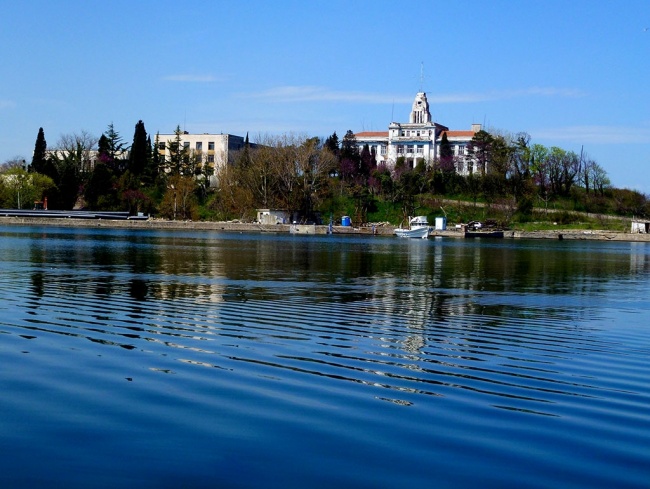
St. Cyril Island or Sts. Quiricus and Julietta Island is a Bulgarian island in the Black Sea, 150 meters (490 feet) from Sozopol’s Stolets peninsula. It has an area of about 0.08 square kilometers (0.03 square miles)[1] and a height of 15 meters (49 feet). The island is connected to the continent by a road and a breakwater. Unlike most other Bulgarian Black Sea islands, its infrastructure is completely set up.
The island was named after the medieval Monastery of Sts. Quiricus and Julietta, the ruins of which still stand there. The monastery was subordinate to the major stauropegic monastery on the nearby St. Ivan Island.
In 1925-1926, a school for fishermen and sailors was built on the island, where only orphans were allowed to study. The school existed for 10 years. In 1936 its base was reorganized to accommodate the Bulgarian Naval Academy.
St. Cyricus Island was demilitarized in the 2000s and is to become a center of international maritime tourism. As it is a national cultural monument, its heritage will be preserved and the new buildings are required to match the characteristic style of Sozopol.
St. Anastasia Island
is a Bulgarian islet in the Black Sea. It is located 1.5 km off the coast near Chernomorets, at 12 metres above sea level, and covers a territory of one hectare. It is the only inhabited island off the Bulgarian Black Sea Coast.
The island is supplied with electricity and drinking water. It is named after the former St. Anastasia convent located on it. The convent had existed since the Middle Ages and was reconstructed during the 18th-19th century. It has been abandoned since 1923 when the island was transformed into a prison.
In 1925, a group of 43 political prisoners (communists and anti-fascists), led by Teohar Bakardzhiev, revolted and escaped from the island, subsequently fleeing to the Soviet Union. In their honor, the island was renamed Bolshevik Island when the communists came into power in 1945.
In the summer, the island is accessible from Burgas via boat services running back and forth multiple times a day
St. Thomas Island
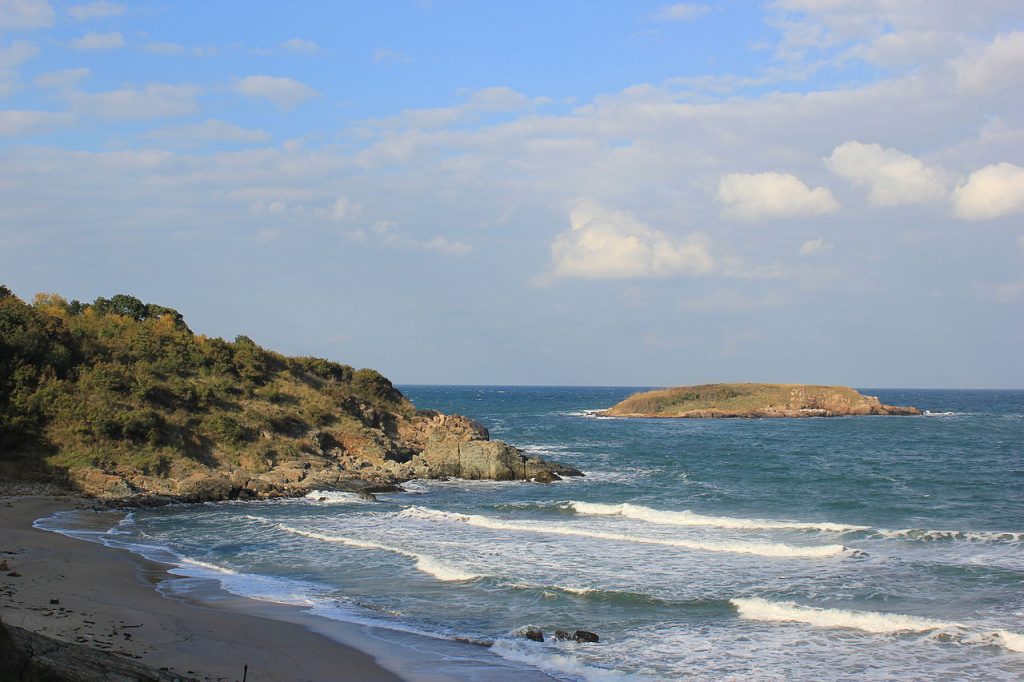
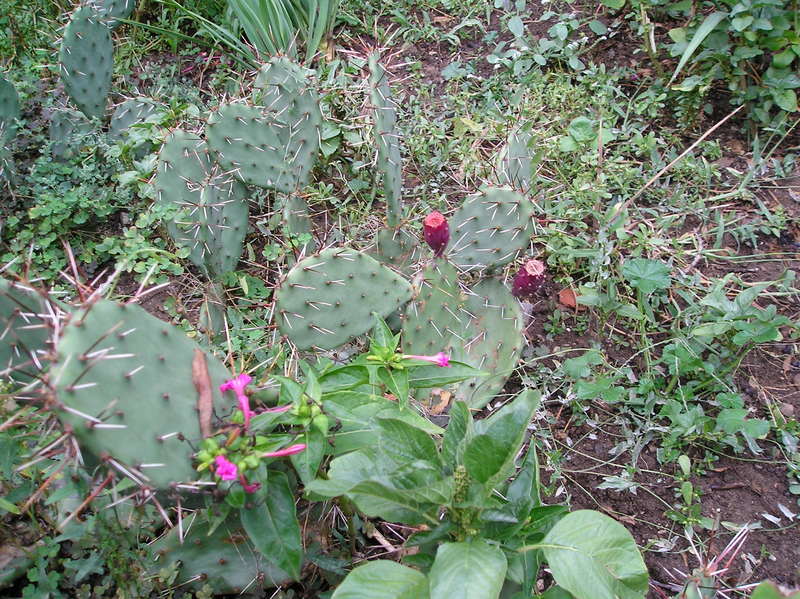
It is located 15 kilometers (9 miles) south of Sozopol. It has an area of 0.012 square kilometers (0.005 square miles) (2.97 acres) and is one of a very few places in Bulgaria where wild cacti grow. The Opuntia cacti were brought from the Botanical Garden in Bratislava, Slovakia and planted by the royal botanist Ivan Buresh on the orders of Tsar Boris III in 1933. They have covered most of the island since then.
Archaeologists discovered an ancient Thracian settlement from the early Iron Age, ancient Thracian ritual pits, a Byzantine settlement from the 5th – 6th century AD, a small monastery from the 12th-14th century and a sunken fortress from Ancient Thrace in the waters between the island and the Bulgarian mainland.
Bulgarian islands in the Danube River
The Danube River stretches along most of Bulgaria’s northern border separating it from Romania.
All islands are uninhabited (except one with a prison on it), most don’t have roads and are rarely visited by people.
Belene Island
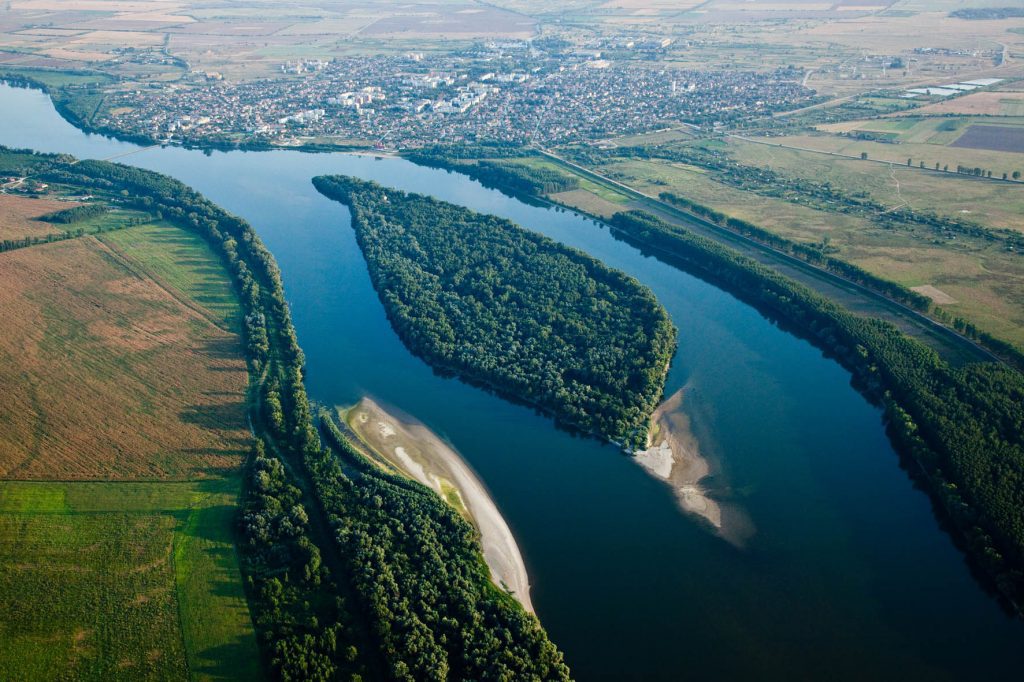
Belene Island is part of the Bulgarian territory. The island is 14.5 kilometers (9.0 mi) long and reaching 6 km (3.7 mi) in width; it is located in the Danube, north of the town of Belene. Belene Island is the fourth biggest Danube island
The island is infamous for the Belene concentration camp that functioned there for the detention of political prisoners between 1949–1953 and 1956–1959. The Belene Prison is still operating as a penitentiary in the western part of the island, while the eastern part is a managed natural reserve.
Natural reserves
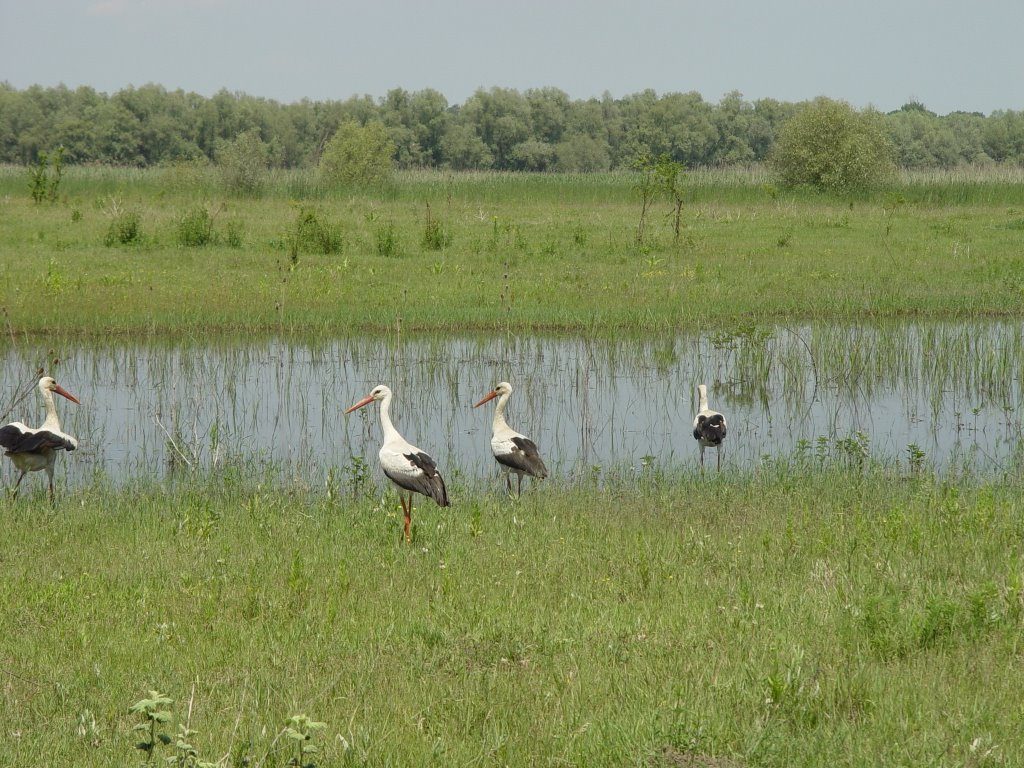
Mainly due to the fact that the islands are not inhabited, their natural habitats have been perfectly preserved and they are largely now natural reserves and protected areas. Birds, plants, algae, fish, and mammals live almost undisturbed by people.
Natural Park Persina comprises of four islands around the town of Nikopol and 19 more around the town of Belene, including the biggest island Belene (also known as Persina). Kalimok-Brashlen is another important reserve, comprising the islands Kalimok, Malak Brashlen, Golyam Brasheln, Mishka, Pyasachnik, Radetski, and one unnamed island, where more than 240 bird species live, half of them nesting.
There is no time to waste, prepare yourself and go to visit one of the interesting Bulgarian Islands.