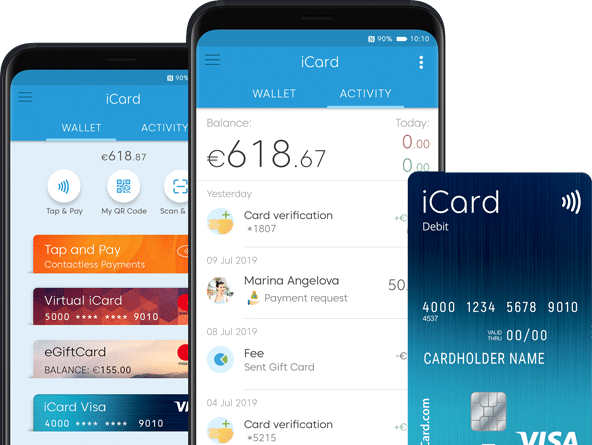

When you move to Bulgaria sooner than later you will need to go to the bank, and depending on which city do you live and which bank you choose, you probably will face some challenges.
Anyone spending significant time in Bulgaria—for a job, a course of study, a fellowship program, or another reason—should consider opening an account in Bulgaria.
The Bulgarian banking system has many actors, you can see local and international banks here.
At the same time this doesn’t mean that all bank offices have personnel that speaks English, also normally the bank call center only has English as a possible foreign language.
If you’re moving to Bulgaria temporarily, you need to make many logistical decisions which will affect just how much sense it will retain your home country issued cards, and in which currency or if you are better off (cost-wise, in terms of currency exchange and foreign conversion rates/fees charged by the bank) obtaining a card in a local currency.
Keep in mind that banks charge fees for international transactions. The fees from 3% to 5% per transaction, this may seem like a little but with the time they’ll add up. Exchange rates in a new country’s currency can also affect the value of your money.
Withdrawing cash? You’ll also get hit with a foreign ATM fee.
Paying with a non-Bulgarian card normally doesn’t have an extra cost for you, but unfortunately, It is not rare that if you don’t inform your bank in advance, your card can be frozen for suspected fraudulent activity, so your bank in your home country will freeze it and be unusable automatically.
Interesting fact: In 2018 the average number of cash withdrawals per card at ATMs in the European Union (EU) amounted to 15.13 per card at ATMs.
Be aware that if you need from Bulgaria to recharge your card, you have to consider usage fees when you pay in the local currency. And assume around 3%. Plus another 1% when you send money back to your home account to recharge it.
Fee applied by Bulgarians banks for incoming transfers in Euro
| Bank | Fee for incoming SEPA transfer | Received amount in BGN |
| iCard | 0/ Exchange rate 1,946 | 1946,00 BGN |
| UniCredit Bulbank | 15 Euro/ Exchange rate 1,945 | 1915,83 BGN |
| Central Cooperative Bank | 0,10%/ Exchange rate 1,952 | 1932,48 BGN |
| Piraeus Bank Bulgaria | 0,10%/Exchange rate 1,951 | 1931,49 BGN |
| First Investment Bank | 0,10%/ Exchange rate 1,949 | 1929,51 BGN |
Opening an account in Bulgaria for foreigners:
- Proof of Identity. Bring your passport.
- Proof of Residency. You may need proof of residency in Bulgaria, and it depends on the bank, normally a recent utility bill, lease agreement or an ID with your address should work.
- Funds.
Documents required to be presented for individuals are identity card (for a Bulgarian citizen or an EU member citizen) or another identity document such as a passport (for a foreigner or a non-EU citizen) or another type of residence permit of the foreigner. This document must be presented both in original and copy.
Account opening, monthly and annual fees in Bulgaria
| Bank | Account opening + Monthly fees | Annual fees |
| Wirecard Bank | 0 Euro/4,90 Euro/month | 58,80 Euro |
| First Investment Bank | 2 BGN/2 BGN/month | 24 BGN |
| Piraeus Bank Bulgaria | 2 BGN/2 BGN/month | 24 BGN |
| Central Cooperative Bank | 2,1 BGN/2 BGN/month | 24 BGN |
| UniCredit Bulbank | 2.50 BGN/2 BGN/month | 24 BGN |
| Deutsche Bank | 0 BGN/0 BGN month | 0 BGN |
| N26 Standard user | 0 BGN/0 BGN month | 0 BGN |
| iCard Standard user | 0 BGN/0 BGN month | 0 BGN |
Bulgarian banks open and maintains accounts and carry operations in local currency (Bulgarian levs) but also in all major foreign currencies such as Euro, US dollars, Swiss francs or British pounds both for local and foreign customers. Respectfully, money can be received into the account through cash payments or cashless transfers.
Once you are prepared to open an individual bank account, you have to sign a contract (obligatory in written and completing forms of the bank) with a request of opening and maintain a bank account under general terms governing the relationships between you and the bank including fees (monthly, yearly, etc.), commissions, termination and other terms of use of the account. Afterward, you will receive the unique personalized number of the newly opened account, IBAN, which is also an international number.
There are two codes banks use for international transactions, and you’ll need one of each.

SWIFT code
The SWIFT code is a type of Bank Identifier Code (BIC) used to identify banks around the world. Your SWIFT or BIC code usually shows up on your account statements.
IBAN number
The IBAN or International Bank Account Number is an identifier for your particular bank account. These codes are most frequently used in the European Union—otherwise, not all countries require them. It should be included in your bank statements along with the SWIFT code. Look for the code starting with two capital letters (these identify your country).
Annual bank expenses in Bulgaria
| Bank | 12 incoming Euro transfers | Annual maintenance fees | 15 withdraws |
| Wirecard Bank | N/A | 114,07 BGN | 90 BGN |
| First Investment Bank | 23154,12 BGN | 24 BGN | 24 BGN |
| Piraeus Bank Bulgaria | 23177,88 BGN | 24 BGN | 15 BGN |
| Central Cooperative Bank | 23189,76 BGN | 24 BGN | 6 BGN |
| UniCredit Bulbank | 22989,96 BGN | 24 BGN | 15 BGN |
| Deutsche Bank | N/A | 0 | 105 BGN |
| N26 Standard user | N/A | 0 | 102 BGN |
| iCard Standard user | 23352,00 BGN | 0 | 15 BGN |
The sooner you can take care of these details, the better. Having money easily accessible will make your life in Bulgaria go much more smoothly!