

Bulgaria is not simply sunny beaches and marvelous winter resorts in the mountains, the land of what is now the Bulgarian country have been populated continuously for more than 9000 years since the neolithic era.
Bulgaria’s territory is literally full of archaeological objects from all time periods. In any region of the country the if you start digging ground often would turn out to be a site able to tell the history of one of the many civilizations that occupied these lands during the years.
Bulgarian lands include a whole variety of ancient and medieval civilizations – Prehistory, Neolith, Ancient Thrace, Ancient Greece, the Roman Empire, the Byzantine Empire, the two Bulgarian Empires, the Latin Empire of the Crusaders, the Ottoman Empire.
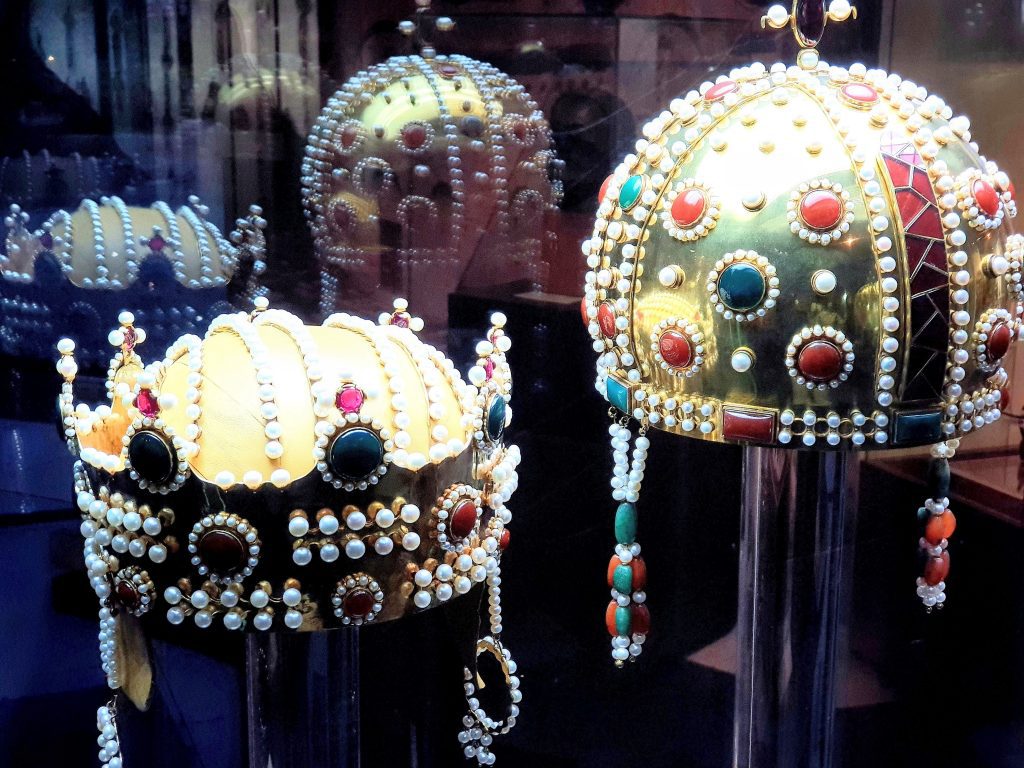
And during this turbulent period, without strongboxes bury the precious treasures was a common practice to protect them from the foreign attacks. and some of them have been found but luck more than 2.000 years after been buried.
“There has always been treasure hunting in Bulgaria and in the Balkans; it has existed forever. But the “old” treasure hunters would do negligible damage. They would decide where to dig based on local legends, or they would just find something while plowing the fields. All that changed when metal detectors were introduced to Bulgaria on a mass scale after 1990″, said archaeologist Ventsislav Gergov describing in detail how the emergence of the metal detectors really “revolutionized” treasure hunting in Bulgaria, turning it into a mass-scale illegal industry.
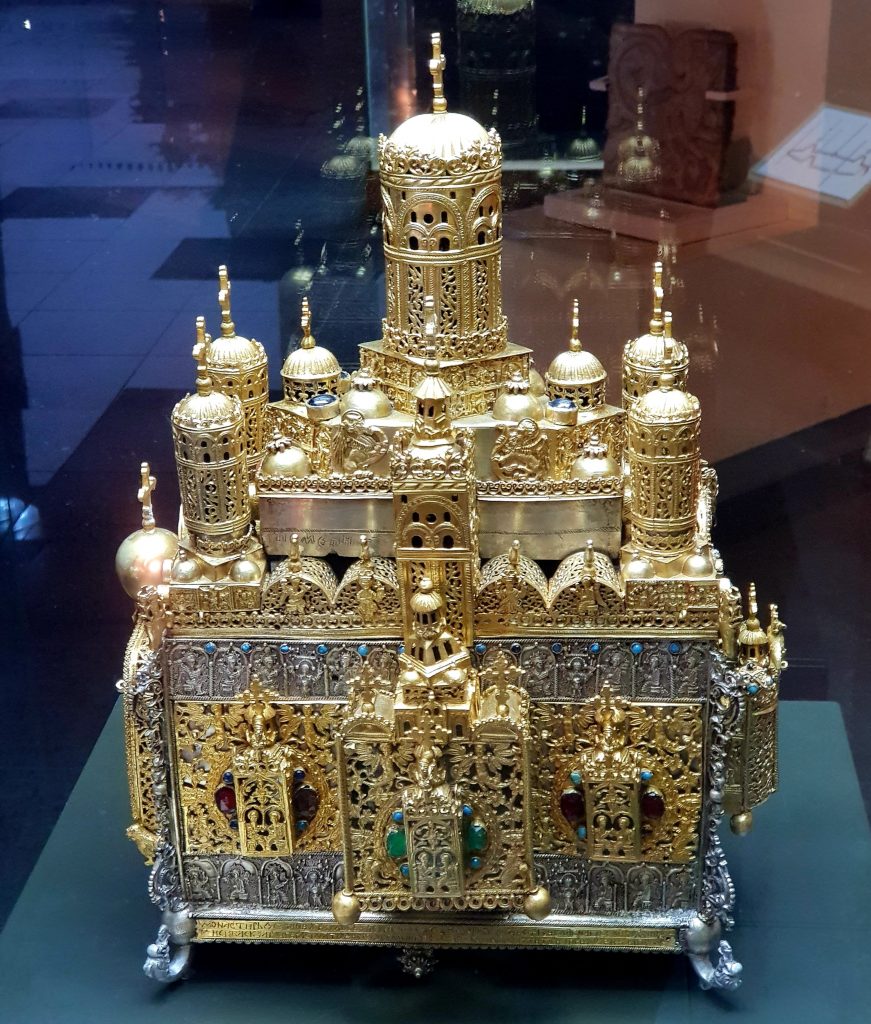
Most Famous Bulgarian treasures
Varna Necropolis
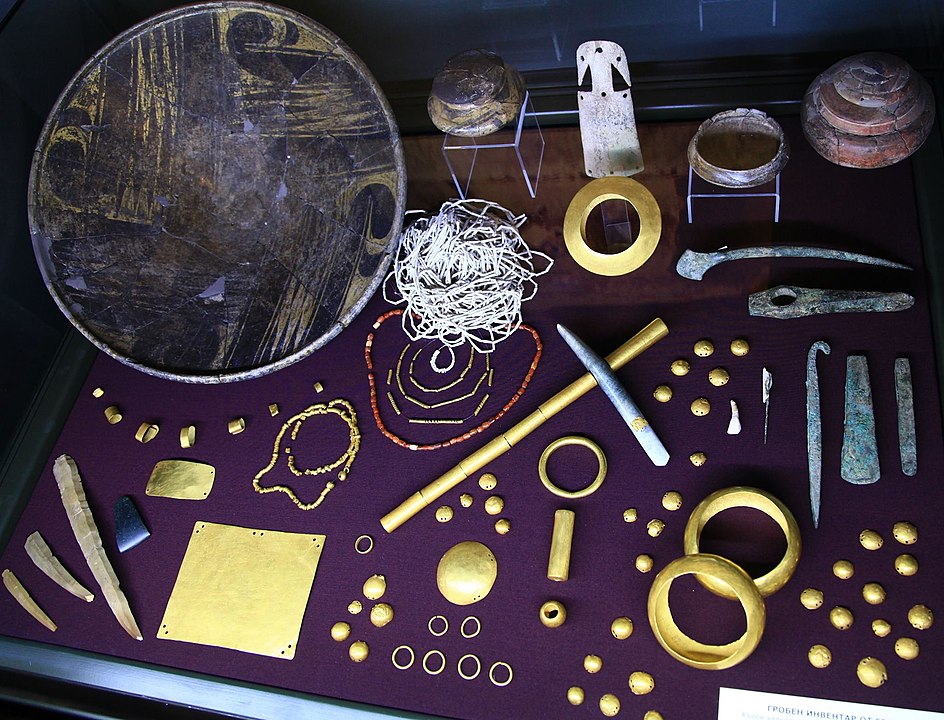
is a burial site in the western industrial zone of Varna (approximately half a kilometer from Lake Varna and 4 km from the city center), internationally considered one of the key archaeological sites in world prehistory. The oldest gold treasure in the world, dating from 4,600 BC to 4,200 BC, was discovered at the site.
The site was accidentally discovered in October 1972 by excavator operator Raycho Marinov.
Three thousand gold artifacts were found, with a weight of approximately six kilograms. Grave 43 contained more gold than has been found in the entire rest of the world for that epoch.
Panagyurishte Gold Treasure
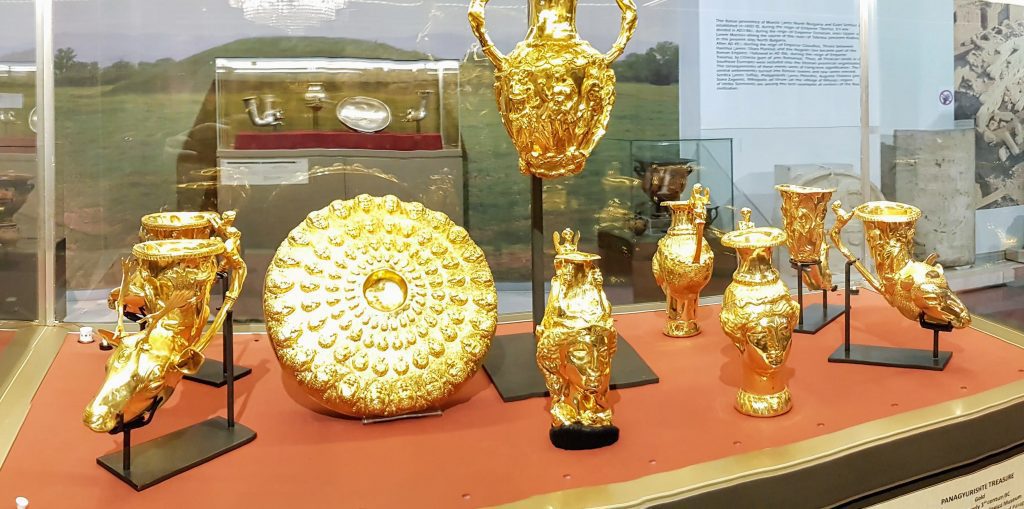
It was accidentally discovered on 8 December 1949 by three brothers, Pavel, Petko, and Michail Deikov, who worked together at the region of the “Merul” tile factory near the railway station of the town of Panagyurishte.
At the time of its discovery, it was considered “the richest treasure to have been unearthed in Europe since World War II.
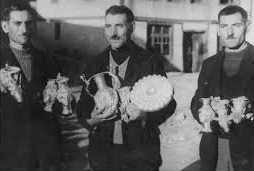
And consists of nine gold parts – a phiale, an amphora and seven rhytons weighing more than 6 kg of 24-carat gold. The treasure is believed to have been part of a ceremonial set used by some of the Thracian kings.
Rogozen Treasure
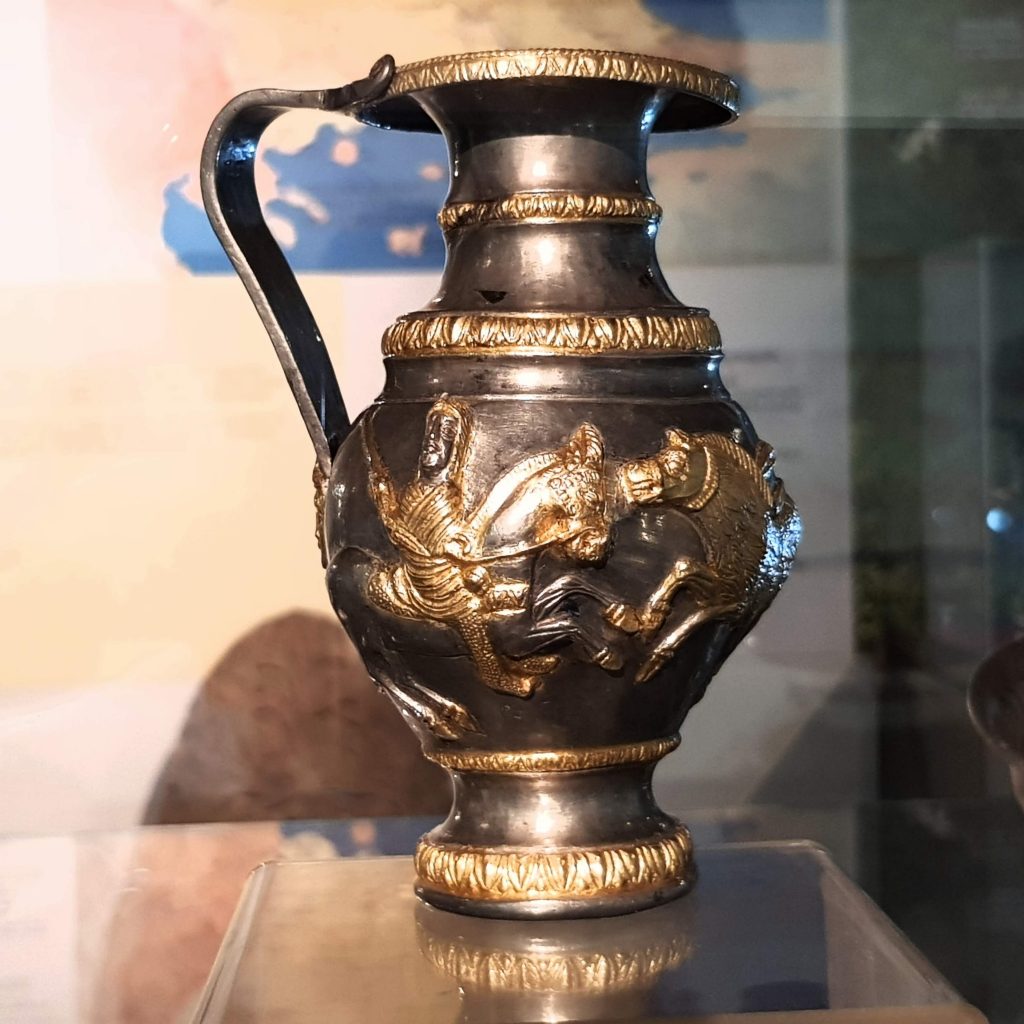
It was discovered by chance in July 1985 by a tractor driver digging a well in his garden in the Bulgarian village of Rogozen.
It consists of 165 receptacles, including 108 phiales, 55 jugs, and 3 goblets. The objects are silver with gold gilt on some of them with a total weight of more than 20 kg.
The treasure is an invaluable source of information for the life of the Thracians, due to the variety of motifs in the richly decorated objects. It is dated back to the 5th–4th centuries B.C.
Valchitran Treasure
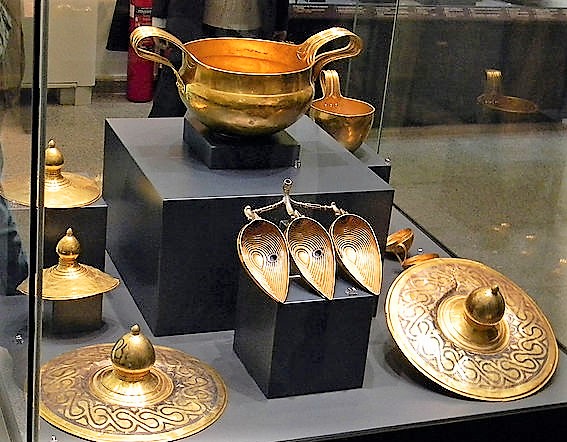
It was discovered on 28 December 1924 by two brothers who were working in their vineyard near the village of Valchitran, 22 km southeast of Pleven, Bulgaria.
The hoard consists of 13 receptacles, different in form and size, and weighs in total 12.5 kg making it the biggest gold Thracian treasure ever found in Bulgaria
Lukovit Treasure
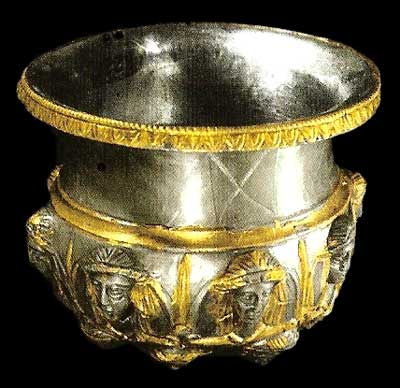
It was found in 1953 near the town of Lukovit, Lovech Province, north-western Bulgaria.
The Lukovit Treasure is dated from 4th century BC and was made by different craftsmen. It was most probably buried in the ground during Alexander the Great’s invasion of the north-western Thracian lands.
Borovo Treasure
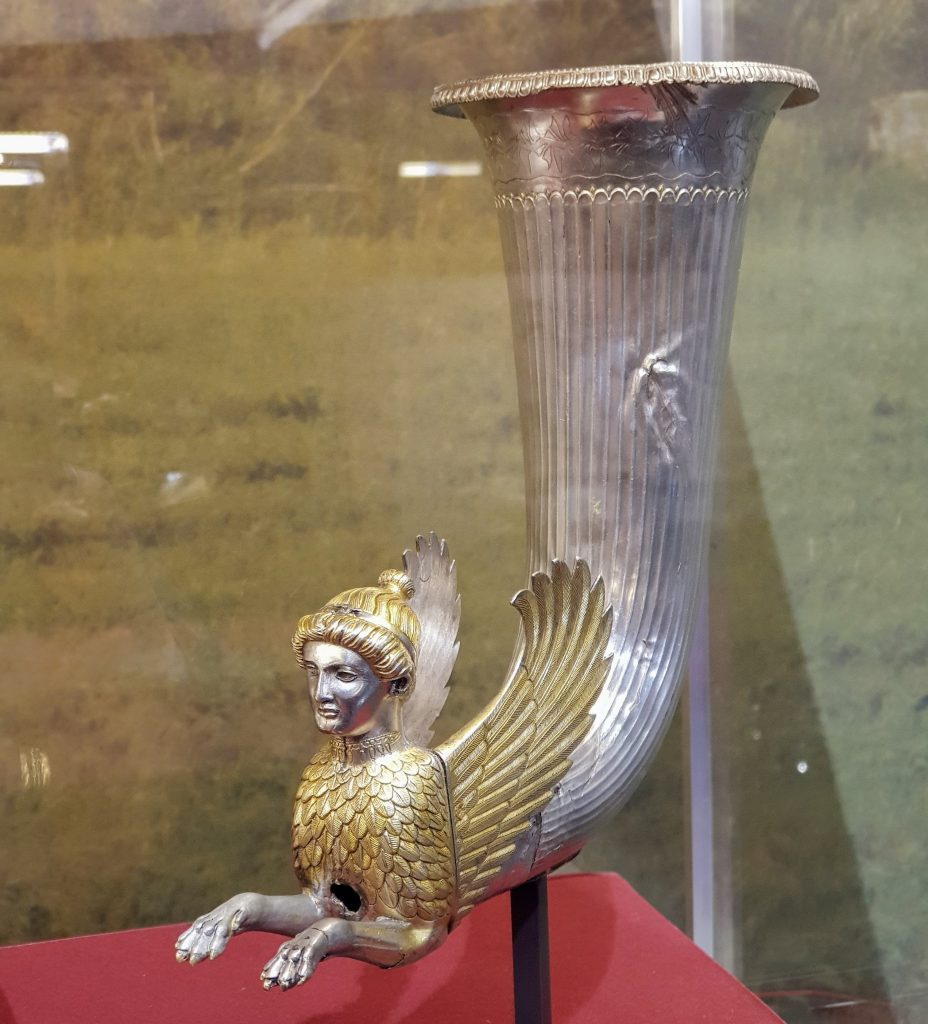
It is a Thracian hoard of five matching silver-gilt items discovered in late 1974 while plowing a field in Borovo, Bulgaria.
The inscription on the sphinx rhyta indicates that the treasure may have been a gift to a local Getic ruler from the king Cotys I (382-359 BC), who reigned in the Odrysian Kingdom from 383 to 359 BC. It is for this reason that the treasure is considered to be from the early to mid-fourth century BC
Letnitsa Treasure
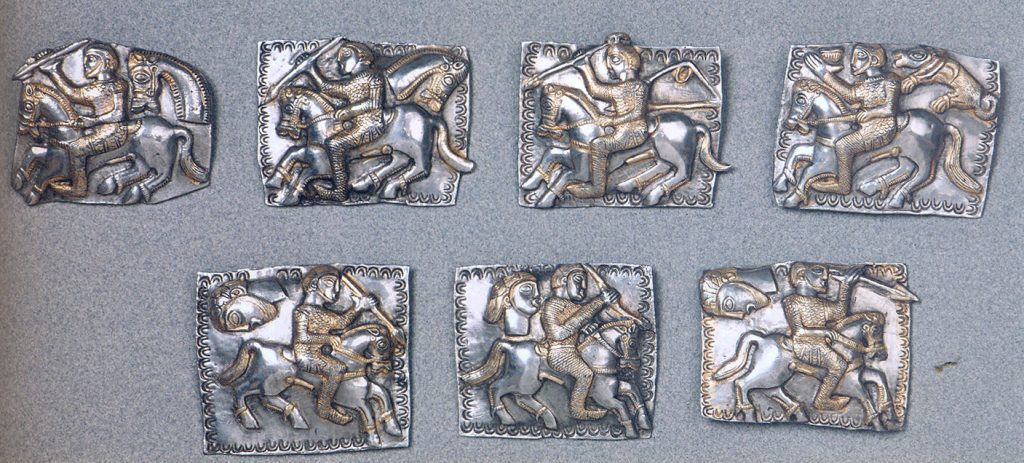
In 1963, people from the agricultural cooperative in the small town Letnitsa were building new cowshed. When they started to dig its foundations, just 50-60 cm underground they discovered bronze vessel turned upside down. When they lifted it, inside they found lots of small silver applications, many of them gilt.
The workers divided the treasure among themselves. Fortunately, the curator of the local museum in Lovech succeeded to collect all the applications afterward – thanks to the local doctor who witnessed the discovery.
Among the applications, there are tiny silver pieces typical for the horse munitions from 4th century BC, along with perfectly preserved horse bridle. On the applications there are different scenes, illustrating probably the idea of a hero. On one piece he is fighting a bear, another represents him fighting a wolf, on the third he is throwing a spear while his servant follows him.
Those applications illuminate the ancient Thracian mythology and their beliefs, allowing us to peek deeply into the Thracian culture and life.
Sboryanovo Treasure
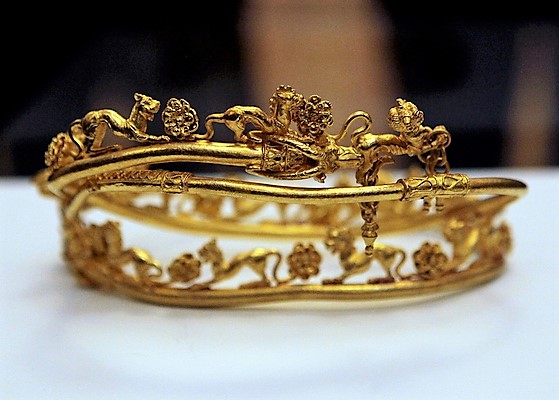
in 2012, archeologists received sponsorship large enough to hire the necessary machinery. On the third day of their excavations, more than 264 golden applications came to the surface, laid in a small wooden chest. Their common weight was 1,8 kg. The discovery is unique – it has been placed in the upper layers of the mound, every layer of which has been piled up in connection with different rituals for the immortalization of the dead. In that aspect, the treasure is actually a funeral gift.
There are two groups of gold applications in Sboryanovo Treasure: applications from a horse’s rein and abundant adornments. Among the latter, most beautiful is the diadem with reliefs of different animals and mythical beasts. There are four golden bracelets in the form of spirals, a beautiful golden ring with a relief image of Eros, a huge amount of golden threads, miniature golden beads, adornment for clothing.
Preslav Treasure
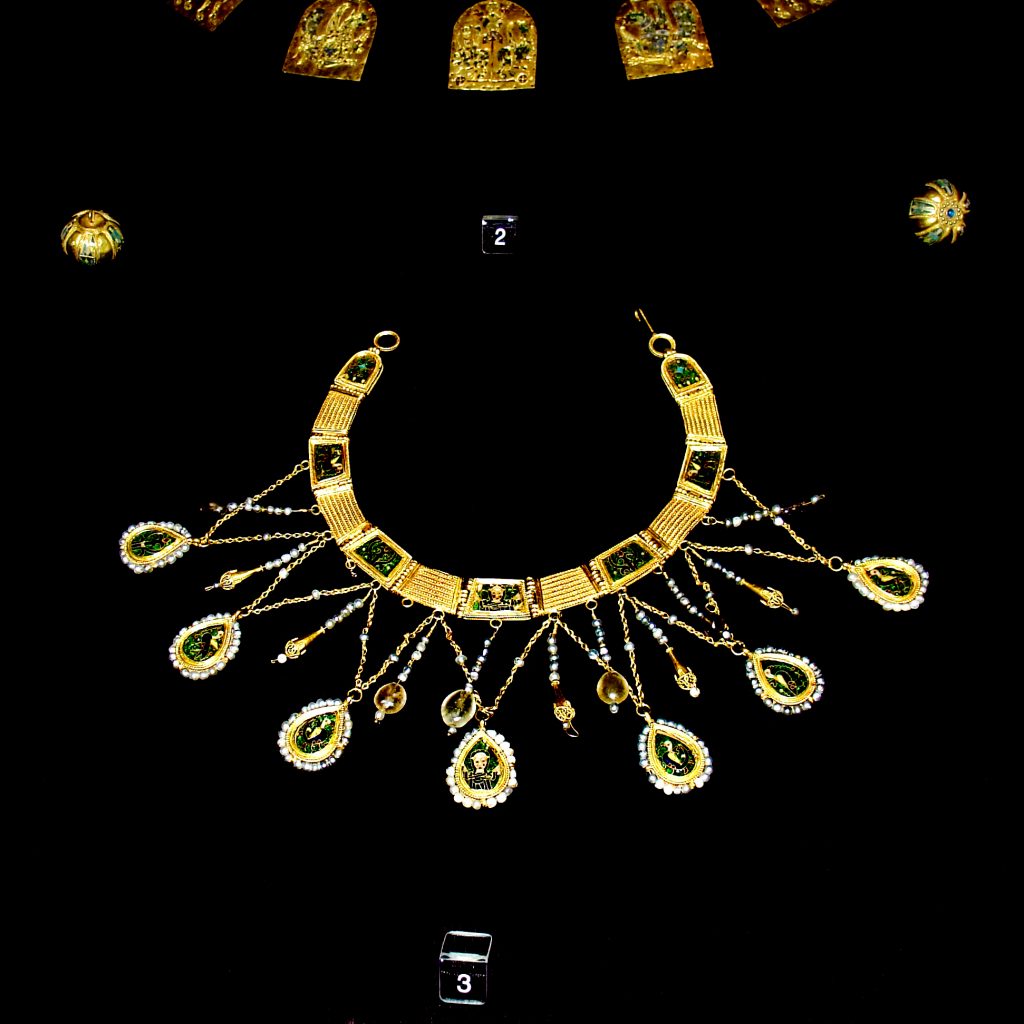
It is discovered in the autumn of 1977 and consisted of a large number of exquisitely made women’s jewels (earrings, necklaces, bracelets, hair needles, and buttons from expensive clothing) and several silver Byzantine coins. Among the numerous objects, two are of special interest and originality. The first one is a necklace consisting of 13 gold plates, strung on a fine gold chain. The second jewel is a diadem of a noble lady.
Probably, the treasure was buried in difficult times for the Second Bulgarian Capital Preslav about the second half of 10th c. Preslav Treasure helps us to come in contact with the rich culture of Great Preslav and at the same time to know of its tragic fate and its fall under Byzantine rule.
Teres’s Golden Mask
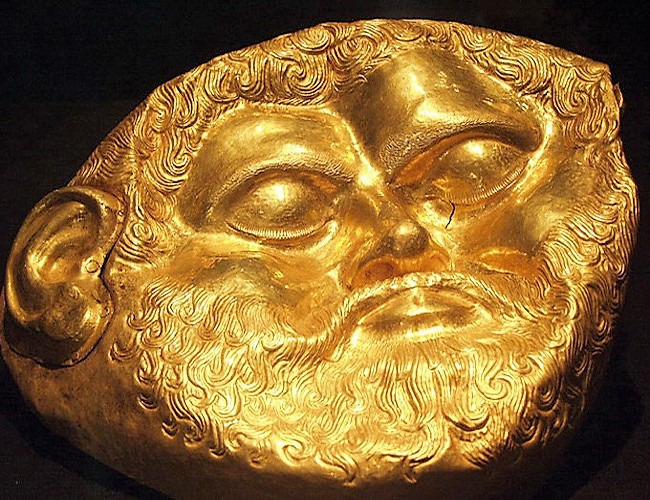
The discovery of this mask occurred in 2004, during the excavations of Svetitsata Mound by the town of Shipka, in the Valley of the Thracian Rulers. The team of archaeologists was lead by the well-known researcher of Bulgarian Antiquity, Ph.D. Georgi Kitov. In the same grave, many more silver and bronze adornments were discovered along with sword and arrows. On the vessels there were depictions of Hercules, Menadius, Priapus. The phial discovered shows the royal dignity of the buried – probably he was Teres, king of the Thracians, whose face known from coins minted in his time bears resemblance with the face from the mask.
Mogilanska Mound Treasure
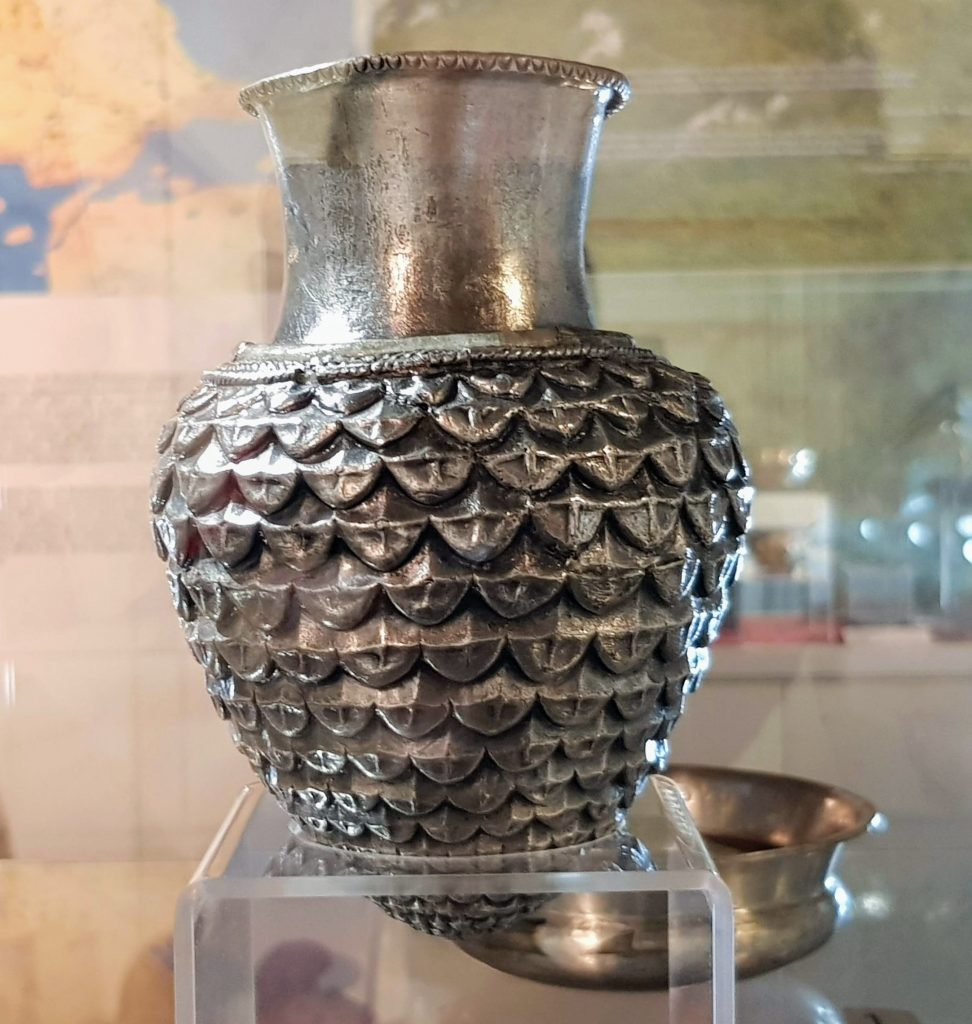
Mogilanska Mound in the center of Vratsa is nowadays half-destroyed and turned into a kids’ playground.
In the first half of XX century, it was just a hill. But archaeologists knew it was a funeral mound. In 1964-1965 they started excavations here. Three graves were discovered, one of them sacked in the antiquity, the other two perfectly preserved.
Most interesting are the items from grave 2. A chariot was discovered along with two ritually killed horses that used to haul it. Behind it, another horse skeleton was found – probably for the coachman of the chariot. Around it, there were silver rein and silver applications. By the horse was laid a young woman – probably a servant ritually killed to serve her master in the afterlife.
On the western side of the grave, the archaeologists discovered a skeleton of a young girl, 145-150 cm high. Her head was adorned with golden wreath garland resembling laurel – 205 grams of pure gold. On her ears were massive gold earrings, artfully decorated with figures of sphinxes. 47 more applications were discovered around here head – probably once those were attached to a veil over her head. In her left hand, the girl held a mirror.
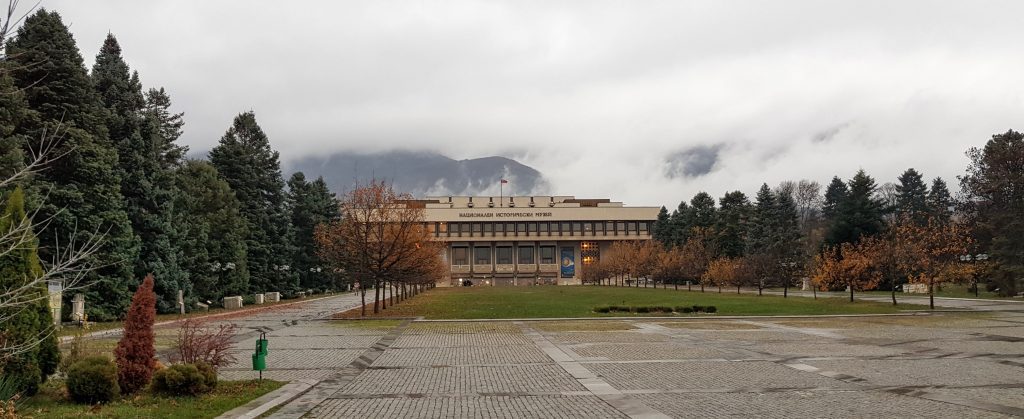
Many of these treasures or their replicas can be appreciated in the National Museum of History in the impressive Boyana Residence.
The Cultural Heritage Act regulates the preservation and protection of the cultural heritage of Bulgaria. Cultural heritage encompasses intangible and tangible immovable and movable heritage as an aggregate of cultural values that bear historical memory and national identity and have their own academic or cultural value. The Act is effective from 10/04/2009

The Act imposes a special regime for treasure-hunting, trading, exporting (both sale and exhibitions) of Bulgarian cultural heritage artifacts.
Treasure-hunting for Bulgarian antiques
Treasure-hunting in Bulgaria is banned but you can see many people scavenging the areas around historic places. they carry metal detectors and other equipment and can be seen normally at dusk.
If you are a treasure-hunter you need to know that if you are caught there are serious sanctions. However, if you accidentally find some antique objects which could be of interest to the museum, you should mind that according to the Art. 90 of the Ownership Act:
Properties buried in the ground, walled in or hidden in another manner, the owner of which cannot be found, shall become the ownership of the state. Therefore selling such artifacts as your own is illegal. Art. 94 of the Cultural Heritage Act requires if a person finds such artifact to contact the nearest state or council museum and hand the found item to its director.