
Before moving to Bulgaria, you should clearly understand the Bulgarian Visa Requirements and how to get the Residence Permit,
If you are an EU citizen traveling to Bulgaria, there are no visa requirements for short visits up to 90 days.
If you wish to stay longer or are planning to live in Bulgaria permanently, a Long Term Residency Permit can easily be obtained from your local Immigration Department, however, unless you speak Bulgarian, it would be wise to take along an adviser to translate and to help you complete the application form.
As a member of the European Union (EU), Bulgaria has no visa requirements for EU citizens, Australian, Canadian, Chilean or USA nationals to visit Bulgaria for a period of up to 90 days, although a passport valid for at least three months beyond your planned length of stay is necessary for travel purposes, and should be carried with you at all times during your stay in Bulgaria.
For non-EU citizens, possession of a return ticket and sufficient funds for the length of stay may also be required. If your stay exceeds 90 days, you need to apply for a residency permit with the immigration department at your local police or at the National Migration Directorate in Sofia.
Want to Stay Longer?
For citizens of EU member countries who are planning an extended stay (longer than 90 days), a Long-Term Residence Permit can usually be arranged within 24 hours through the police immigration office in the city or town where you are staying.
The criteria are that you are either:
In Employment or are self-employed in Bulgaria; following a recognized educational program, or you have sufficient income or funds to support yourself and your family for the period of your stay. Long-Term Residency Permits can be renewed as required or, after five years, you may apply for Bulgarian Citizenship.
All foreigners with a Long-Term or Permanent Residence Permit are obliged to carry the card or certificate, as well as their passport at all times, and failure to present these identification documents to the authorities when asked to do so can result in a fine.
Before applying for a Residence Permit, it is necessary to open a Bulgarian bank account and get a letter from that bank stating that you have an active bank account. You should also have at least the equivalent of one month’s minimum wage 235.20 EUR per month (Jul 2017) in the account.
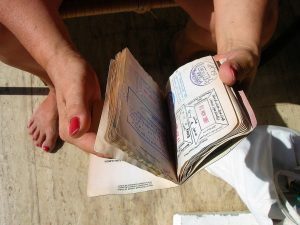
Types of Bulgaria Visas
There are No visa requirements for EU Citizens
Short-Stay Visa (Type C) or Temporary Residence Permit for Non-EU Citizens
This is issued for single or multiple entries into Bulgaria for not longer than 90 days within a six-month period from the date of the first entry.
Long-Stay Visa (Type D) or Long-Term Residence Permit.
This is a Residence Permit issued to foreigners wishing to take up long-term (more than 90 days) or permanent residency in Bulgaria. Long Term Residence Permit applications must be made within 90 days of arrival in Bulgaria at the National Migration Directorate in Sofia or the immigration department of the local Police Station at your place of residence. You will need to take along the following documents:
Passport
Property title deeds or rental contract as proof of an address;
Proof of adequate funds if not employed (e.g. Bank Account);
Company registration documents or work contract (if applicable);
Proof of health insurance from your former EU country of residence translated into Bulgarian;
Application form completed in Bulgarian.
The residence tax must then be paid at the immigration office and the Long-Term Residence Permits then issued on the same day. If there are any documents missing, you have seven days in which to present them.
Non-EU citizens:
Applications for a Long-Term Residency Permit must be submitted to the Bulgarian Consulate in your home country.
A Long-Term Residence Permit can be obtained by the following:
Employees (with a work permit);
Those with business in Bulgaria;
Spouses of Bulgarian citizens;
Representatives of a foreign commercial company registered with the Bulgarian Chamber of Commerce and Industry;
Investors who carry out activities under the Foreign Investment Act;
Pensioners who receive a pension with sufficient funds to cover their living costs in Bulgaria;
Foreigners in Bulgaria for medical treatment;
Family members of a D-type visa holder;
Students in full-time education;
Those of Bulgarian descent.
The following documents will be required when applying for a long-term residence permit:
Passport, a valid visa or residence permits held, and the last Bulgarian entry stamp;
Proof of accommodation for the duration of residence in Bulgaria;
Proof of possession of sufficient funds to cover living costs for the duration of residence in Bulgaria (equivalent to the Bulgarian minimum wage);
Proof of Health Insurance for the duration of residence in Bulgaria;
Application form to be completed in the Bulgarian language.
A residency tax must be paid at the bank in the immigration office. A temporary residence certificate is then issued and the long-term residence card is issued within three months.
Permanent Residence Permits
After 5 years of uninterrupted residency in Bulgaria, an application can be made for permanent residence (and later you can also apply for Bulgarian citizenship). This entitles you to the same rights as a Bulgarian citizen,(except for the right to vote. Foreign nationals who have been married to a Bulgarian citizen or to a foreigner with permanent residence in Bulgaria for five years may also apply for permanent residence. Applications for a Permanent Residence Permit must be done no later than 60 days before the expiry of the Long-Term Residence Permit. The permit is issued within two months, after submission of the documents.
Change of Address
Any change of address needs to be reported within five days to the local Police Office.
Bulgaria was the first country to implement the new Blue Card from 1st June 2011. This is essentially a renewable 2-year visa that enables highly skilled non-EU workers to take up jobs in the EU and to live and work there with their families for up to 2 years before re-applying. Conditions for obtaining a Blue Card are that the applicant has a higher education diploma and at least 5 years’ experience in the job they are applying for. They will only be employed if there are no Bulgarian workers suitable for the position. Bulgaria currently has a shortfall of skilled workers particularly in the fields of Engineering and IT. and welcomes highly skilled professionals from other countries.