

It is well known that in our days, cars are no longer luxury items, but a necessity in this modern life.
Before you even start thinking to buy a second-hand car in Bulgaria, it is important you to check if your home country driver’s license is valid in Bulgaria, because you don’t want a car that you won’t be able to drive.
You may ask yourself if is a good idea to buy a used car in Bulgaria, and the answer is yes it is.
Bulgaria is well known as one big market for second-hand vehicles from the EU (with all the good and bad that this entails).
The good thing is that prices are lower than in most EU countries.
And that the Bulgarian law does not put any restrictions on used car sellers. Second-hand cars can be purchased both in car showrooms and from companies dealing in resale. They can also be bought directly from the car owners.

One of the problems is that the seller does not have the obligation to provide the consumer with a technical report. They only have to provide a valid technical inspection document (this document is not enough to prove that the car is in good condition).
In Bulgaria, all vehicles must have valid Technical Inspection to be sold.
The technical inspection cost around 40 levs (average cost: EUR 20) this inspection is done at certified places and the document that they issue is called Annual Technical Inspection (Годишен Технически Преглед in Bulgaria).
There are many of places all around Bulgaria where you can get this document, keep in mind that this is also part of the standard set of documents that the road police may require from you if they stop you for inspection.
When you have to pass the Technical Inspection it will depend on which kind of vehicle do you have:
– Passenger cars must undergo TI once a year.
– Taxi cars are required to appear at a TI every 6 months.
– Trucks over 10 years of age are also required to undergo a TI every 6 months.
– New cars should appear for the first time at the TI in the third year, with a second review two years after the first (they occur annually after the fifth year).
When you decide to buy a second-hand car in Bulgaria you can choose from 3 options choose to buy a used vehicle from one of the licensed car dealers, or to buy it directly from private individuals.
When you start the process of buying a second-hand car in Bulgaria it is always recommended to be accompanied by a trusted mechanic, or if you can’t get a mechanic at least with someone who knows a lot about cars.
Unfortunately in Bulgaria as in many of the countries in the world, the car dealers can hide relevant information about the condition of the car, no to mention that many vehicles have their mileage lowered to look newer than they really are (action that is a felony in Bulgaria), but still a common practice in some auto dealers.
How to buy or sell a used car in Bulgaria
For the sale of a used car between two private individuals to be considered legal, both the seller and the buyer must sign a vehicle purchase contract in front of a Notary Public.
You can pay for the car in cash if the amount of up to BGN 9 999 (approximately EUR 5 111. Beyond that limit, payments should be made via a bank transfer).
The contract must be signed by both parties or their legal representative(s) before it can be declared valid by the Notary. (If the car is owned by a company it is not necessary to sign at a Notary Public.) The signed contract is needed for the new owner to register the car in their name at the local Traffic Police Office.
The seller provides the following documents:
1- Vehicle registration document
2- The roadworthiness stamp and certificate,
3- A receipt proving payment of the annual Vehicle Tax – the owner of a car receives this after paying the yearly Vehicle Tax at the Local Taxes and Fees Office
4- Proof of identity
5- Proof of third-party insurance
The buyer will need to provide the following:
1- Proof of identity
2- Payment
3- Registering the Vehicle
Within 14 days the new owner must go to the local Traffic Police Office to register the vehicle. The vehicle must be registered at the Traffic Police Office in the town of the new owner’s permanent address in Bulgaria.
Local Traffic Police require the following documents for the registration:
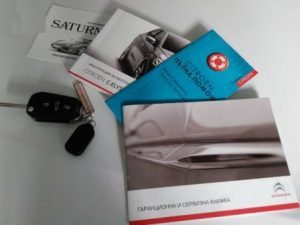
1- Registration application form (provided by the local Traffic Police Office in Bulgarian)
2- The original vehicle purchase contract and a copy
3- Proof of payment of the Vehicle Tax
4- A valid third-party insurance policy, compulsory for all vehicles
5- Proof of identity
6- Proof of address registration obtained from the local Address Registration Office, usually in the corresponding City Hall
7- The vehicle’s previous registration document
We suggest you find someone to help you with the paperwork at KAT office (Traffic Police) and to deal with all vehicle registration. It’s quite a hassle even for Bulgarians. And keep in mind that first arrives first serve, then you need to get there as early as possible in the morning.
Within two months upon the date of registering the vehicle with the Traffic Police, the new owner has to inform the municipality where they live (if the vehicle has been registered on the name of a person).
Or where the company is located (if the car has been registered with the name of a company or a representative office) (“Local Taxes and Charges” Department).
When submitting the declaration, you will be given a reference number, with which you can follow your liabilities and pay the annual tax for your vehicle.
If you decide to buy a car in Bulgaria, follow our advice, be careful and check the car documents meticulously, and the car condition (take it to a respectful car shop for check).
Tha the car shines doesn’t mean working correctly, and that’s my advice I learned the hard way, making the mistake of being rushed by the car dealer and finished buying a car with lots of problems.