
Rayne Hall
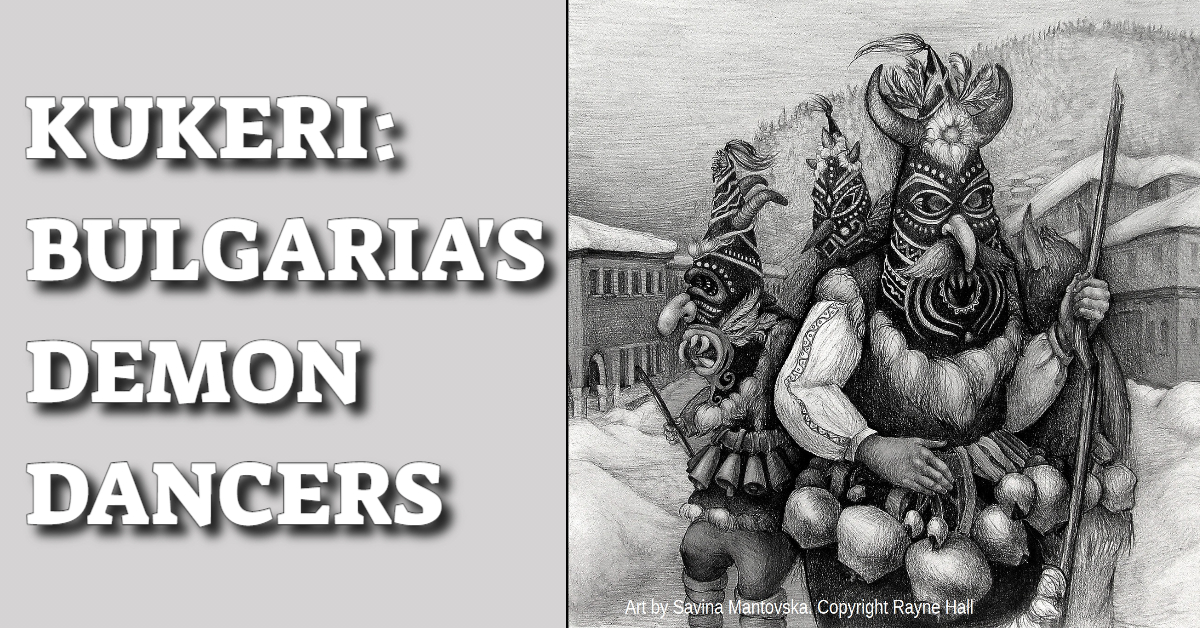
Figures in shaggy pelts stomp down the road, their faces enormous, grotesque, grinning under antlers and horns. Bells clank with their rhythmic steps and a bagpipe wails. The demon dancers are here!
Every year, men perform an ancient ritual to protect their village and drive evil spirits out. Their fantastic costumes impersonate demons with scary masks, antlers, furs, feather and tusks, a fearsome sight to behold. Kukeri don’t just frighten the onlooking humans: they are so terrifying that they scare the real demons into flight.

Every village and town has its own characteristic costume and style of mask, so each dancer’s costume varies from those of his peers. Many derive their inspiration from animals: Some look like grotesque bears in their shaggy fur overalls, others display winged headdresses with feathers from eagles and storks, combined with cow horns for noses and boar’s tusks for teeth. Many materials are repurposed – the tassels from a discarded curtain, the embroidery from the late great-grandmother’s apron, coin-shaped pendants from an old gypsy necklace. Mirrors reflect the face of evil, so demons take fright at their own sight and depart in haste. Above all, there are bells – heavy cowbells strapped to leather harnesses, chinking and clanking with every step.
Besides the demon dancers, many troupes have performers acting out traditional, often comic roles: a bride, a priest, a policeman and a hooden horse are often part of the show. Musicians with traditional instruments – bagpipes and drums, perhaps a fiddle or accordion – play a simple, repetitive tune. Combined with the chinking of the bells, this creates the ordered cacophony characteristic of the Bulgarian Kukeri.
The origins are lost in the mists of time, reaching back to the Dionysian rituals of ancient Thrace and beyond. The main season for Kuker events is February. When the days brighten, it’s time to cleanse the villages from the evil that invaded homes and souls during the winter darkness.
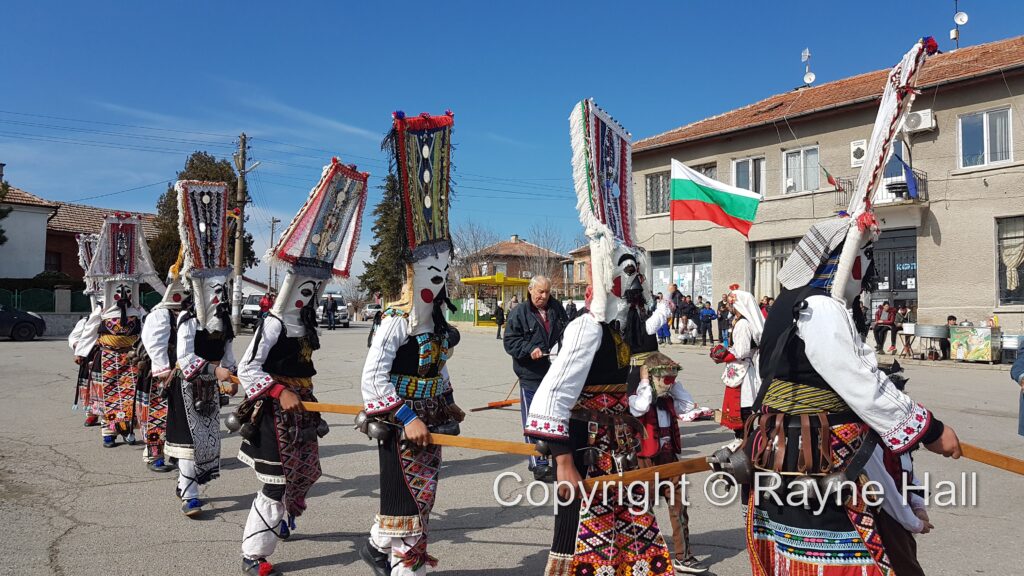
The dancers stomp along the village roads, waving staffs or wooden swords and perform a choreographed ritual outside the mayor’s office in the village square. In some communities, they enter the homes, screeching and howling through every room to chase away any entities lingering in corners. Home owners show their appreciation for this service with gifts of pastry and glasses of the fiery fruit brandy rakia.
Many Kukeri groups are strictly men-only gatherings. However, female and mixed-gender troupes exist. In many places, the dancers are men – but it’s the women who are in charge of costume design and troupe management.
Some communities hold festivals, invite troupes from neighbouring villages to march and jump in noisy, colourful pageants. Towns host Kukeri from the whole region, and award prizes for the best performers and the best-costumed troupe. Kukerlandia, the annual festival in the city of Yambol, is the biggest of these. It lasts several days and draws participants from all over Bulgaria, as well as performers of related traditions from all over the world. Although the pandemic has halted the big Kukeri events in 2021, small outdoor rituals take place and will be shared online for everyone to enjoy from the safety of their homes.
In our village – Kirilovo in the Yambol Province in south-east Bulgaria – the men dress as women in traditional female costume, including the brightly woven aprons characteristic for our region. Their heads are inside white-black-red mask-hoods and carry big rectangular headdresses with tassels and lace, lovingly crafted by Tanya, the village librarian.
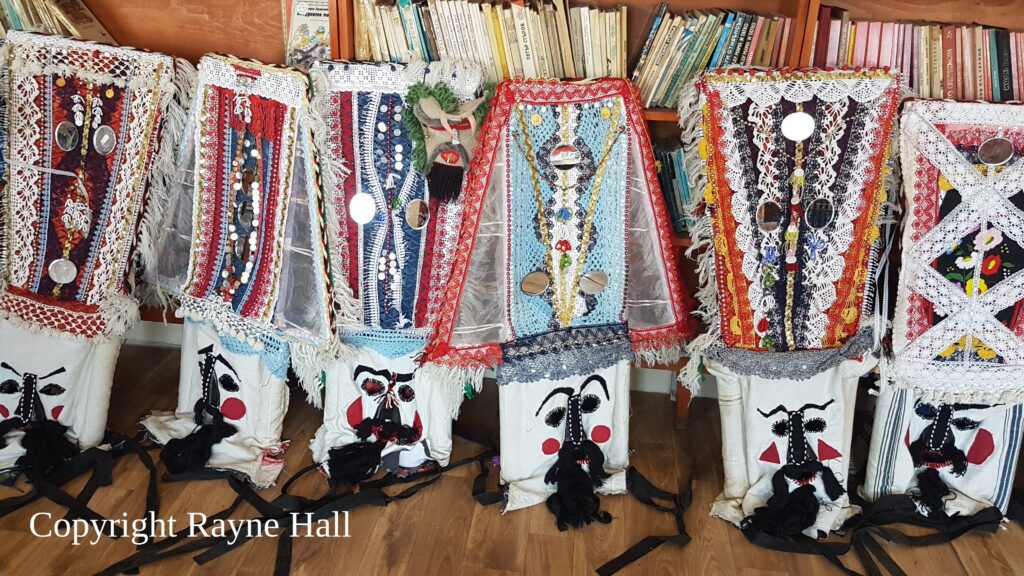
When a villager departs life, Tanya asks for pieces from their clothes – especially embroideries and hand-crocheted lace – and incorporates them into Kukeri costumes. This way, something from the dead people lives on, and their memory and spirit get revived every year and helps keep the village safe.
During the ritual, men dance in a circle, with the cowbells going choink-choink-choink – and mime agricultural activities such as ploughing and sowing. The focus is on bringing blessings to the village. Wearing the bell-weighed harness requires considerable strength, especially for the rhythmic jumps which put a great strain on the leg muscles and knee joints, so the youngest members of the troupe get a lighter version with chinking goat bells.
While our village’s Kukeri are benign in their actions and appearance, others are designed to scare. Gaping blood-read mouths studded with sharp boar’s teeth, horns that could impale and claws that could kill are a terrifying sight to behold, especially when a whole horde of the monsters stomp through the neighbourhood and into your home.
These scary figures impersonate demons – and at the same time, they intend to drive demons away. This contradiction intrigued me. I wondered: What if a band of Kukeri are so effective in their demon act that real demons, instead of fleeing, are attracted to their own kind? What would happen if a real demon decides to join a Kukeri troupe?
This idea got me started writing the story ‘Thirteen Kukeri’ in which the group’s proud leader suddenly realises he has one dancer too many in his troupe. Like all stories in the book, this tale is spooky, and invites you to experience the colourful, creepy side of Bulgaria.
——————————-Book Blurb ——————————————————————–
The Bride’s Curse: Bulgarian Gothic Ghost and Horror Stories
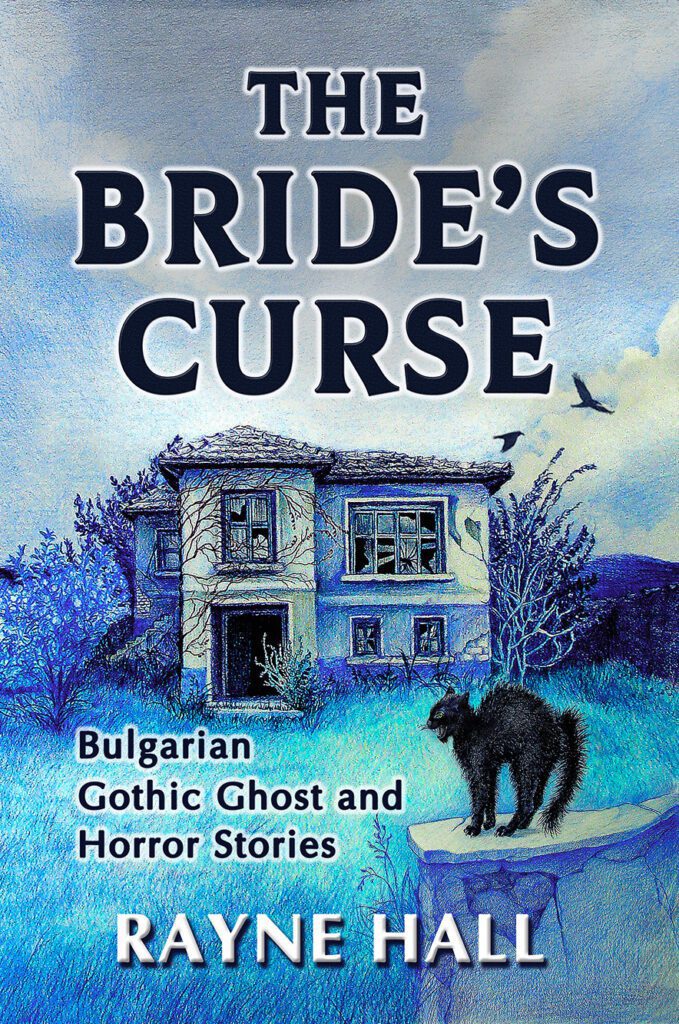
Welcome to Bulgaria, my adopted country in the south east of Europe, a land of snow-blanketed mountains and sun-baked plains, deep pine forests and fragrant rose plantations, studded with remnants of past eras – ancient Thracian and Roman, medieval, Ottoman and Communist.
Join me on a fictional journey to remote villages where you’ll meet native Bulgarians, travellers and expatriates, demons and ghosts. I’ve blended my personal experiences with Bulgarian folklore and mythology, and let my imagination roam. All the events and characters are my inventions, yet they’re steeped in Bulgarian myth and reality.
The tales in this book belong to the ‘quiet’ horror category – more creepy than gory, rich in atmosphere and suspense. Instead of throwing you into a whirl of violent action, I’ll take you on a gentle visit to experience Bulgaria – the wealth of her nature, her economic poverty, her legends and traditions, her creepy abandoned homes and her timeless beauty – all from the safety of your armchair.
The stories are personal, arising from my perceptions and imagination. Still, I hope you’ll gain a ‘feel’ for the country. After each story, I’ll tell you a little about the genesis of that tale, the sources of my inspiration.
Bulgarian artist Savina Mantovska from Sofia has created beautiful illustrations, enriching each story with her vision.
Come and join me under the grape arbour while the sinking sun streaks the mountains with crimson and purple. Sip a blood-red pomegranate juice or a fiery rakia, and enjoy my creepy tales.
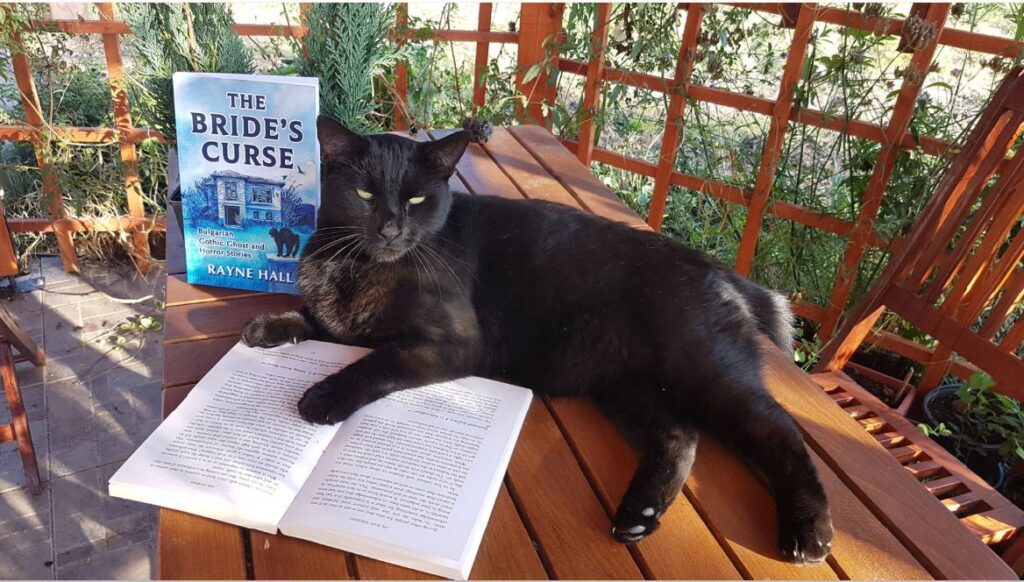
Here’s a link to the book (ebook and paperback) on Amazon: mybook.to/Gothic
About Rayne Hall

Rayne writes fantasy, horror and non-fiction, and is the author of over seventy books. Her horror stories are more atmospheric than violent, and more creepy than gory.
Born and raised in Germany, Rayne has lived in China, Mongolia, Nepal and Britain. Now she resides in a village in south-east Bulgaria where she writes books, practises permaculture gardening, and trains cats, The country’s ancient Roman ruins and the deserted houses from Bulgaria’s communist period provide inspiration for creepy ghost and horror stories.
Her lucky black cat Sulu, adopted from the cat rescue shelter, often accompanies her on these exploration tours. He delights in walking across shattered roof tiles, balancing on charred rafters and sniffing at long-abandoned hearths.
Rayne has worked as an investigative journalist, development aid worker, museum guide, apple picker, tarot reader, adult education teacher, bellydancer, magazine editor, publishing manager and more, and now works full time as a writer and publishing coach.