
The ‘Kukers’ are one of the oldest and most fascinating of the Bulgarian traditions.
Once a year, people all across the country will dress as these strange creatures to enter into parades and dancing. There are few kukeri festivals in different regions of Bulgaria, been the biggest one in Pernik – home to the International Bulgarian Festival of Masquerade Games, or ‘Surva’ Festival that has been included since 2015 in the UNESCO’s list of protected non-material cultural heritage .
Unfortunately, this 2021 the XXIX International Festival of Masquerade Games “Surva” that is traditionally carried out in the city of Pernik has been canceled.
You can still witness the Kukeri masks and dances by visiting with us any of the following locations:
Jan 11 – XVII Kukeri and Masquerade games “Simitlia – the ancient land of the Kuker” in Simitli
Jan 18 – ХVII Masquerade Festival „Surova” in Breznik
Feb 22 – “Kukove” in Rakovski
Feb 27 – Mar 1 – XXI International Masquerade Festival “Kukerlandia” in Yambol
Mar 1 – National Kuker Celebration “Pokladi” “Sirni Zagovezni” in Momin Prohod
Mar 1 – Sirni zagovezni in Kalugerovo
Mar 1 – Dervish Day in Slavovitsa, Pazardzhik
Mar 1 – Sirnitsa in Chelopech, Sofia
Mar 1 – Dervish Day in Lesichovo, Pazardzhik
Apr 12 – Kukeri celebration in and Easter in Eleshnitsa, Blagoevgrad

The Kukeri custom on Bulgarian lands originates from the

In the rest of Europe similar, Kukeri custom is widely spread in southern and central Europe – and in Romania, Moldova, Serbia, Greece, the Republic of Macedonia, Slovenia, Croatia, etc. Similar mask carnival masks exist in Italy on the island of Sardinia . The Italian mamutones wore black wood masks, belt buckles and cowls.
A very close ritual is also celebrated in Cantabria, Spain and it is celebrated on the first Sunday of the new year. Kukeri also has Poland, Hungary, Croatia and Slovakia, as well as in Austria where they are called Percht.
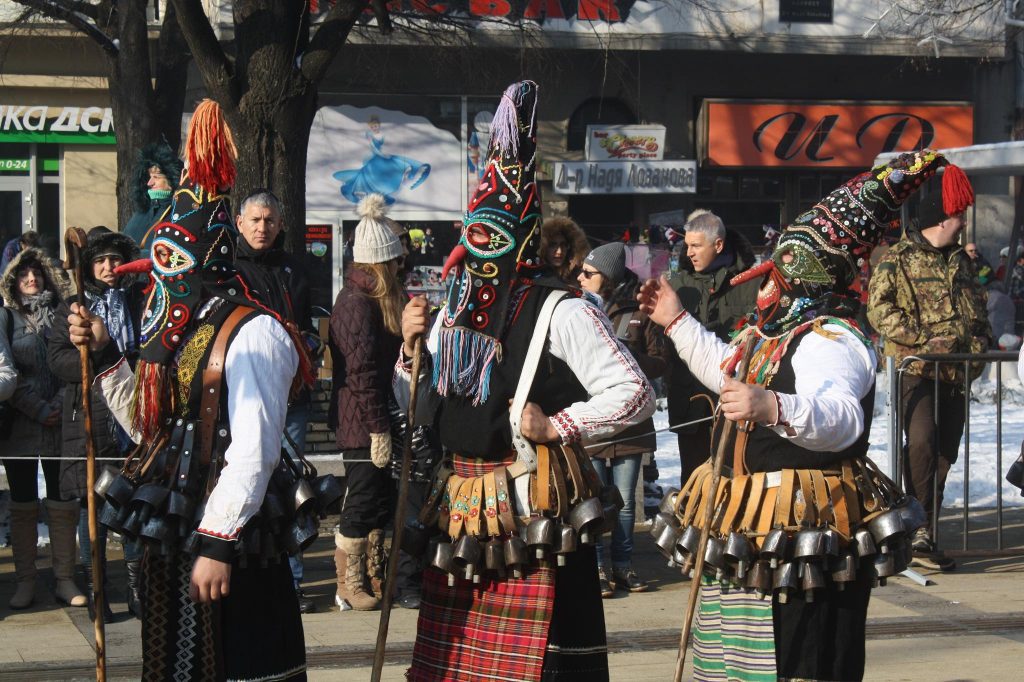
The dance of the masked men is a mystic unity of rhythm, sound, and color. They move in a special step. Wearing impressive masks and unique costumes they fill the air of the villages with the sounds of hundreds of bells and whispered blessings wishes for prosperity.
The mask, according to folklore beliefs, protects from the harmful influence of impure powers. Bulgarian ritual masks are a rich source of information on the country’s various ethnographic regions (each region has their particular way to create the costumes).
The sounds of the bells hanging from the belts of the dancers are said to reinforce the protective properties of the masks.
There are all kinds of characters in the group of masked people. Traditionally, no women are allowed to take part
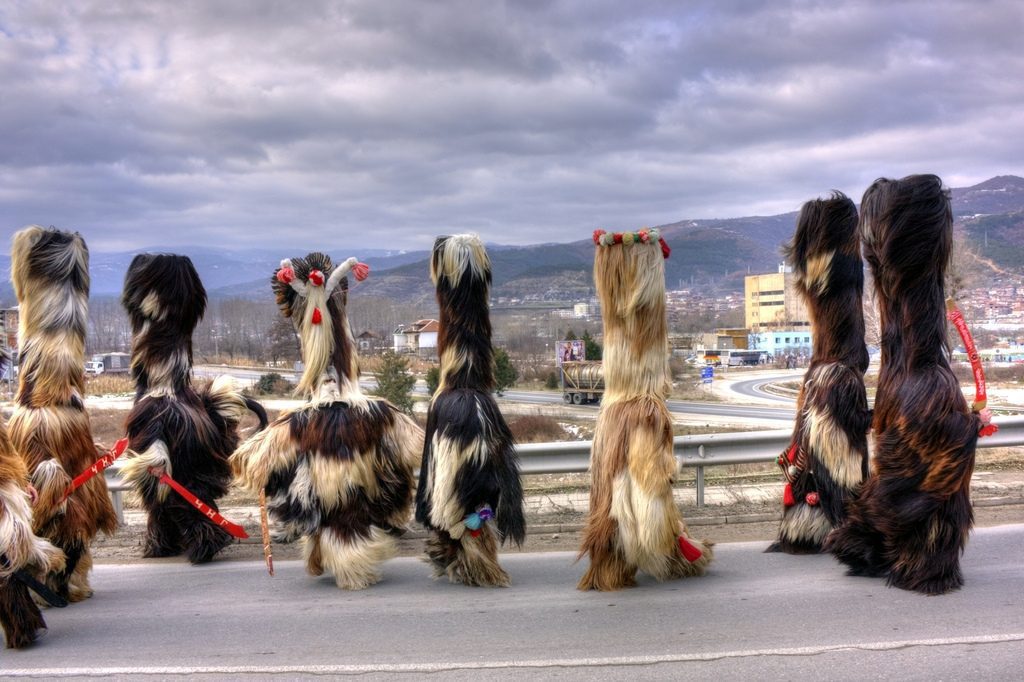
As the masquerade tradition in Bulgaria is still alive, it is subject to constant change. It takes on new symbols and images and the once strict requirements towards the age and sex of the participants tend to relax.
Since the days of the Bulgarian Cultural Revival characters from the neo folklore culture have started to appear in the rituals. Significant political changes and social issues still produce parodies of representatives of different social classes. Nowadays the minimum requirement for participation is having the willingness to take part.