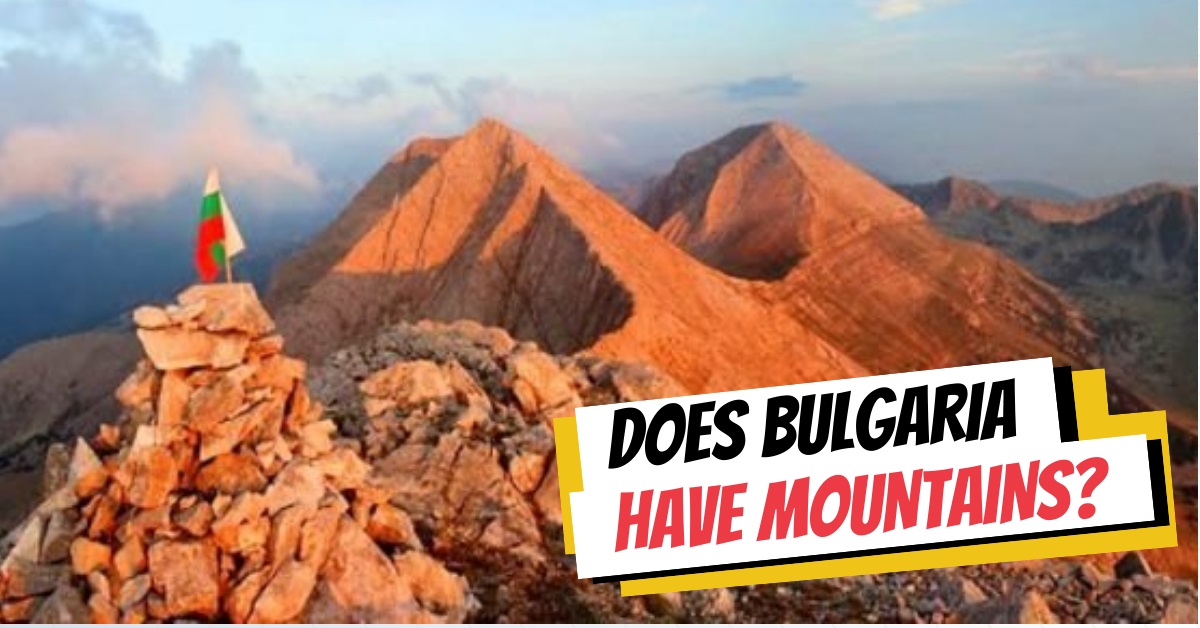
Yes, it has, more than 30% of Bulgarian territory is covered by mountains, they are located principally in the central and the southwestern parts of the country.
Bulgaria with its area of around 111 000 square km, offers a great diversity of terrains, landscapes, and climates, a variety that is difficult to see in other countries in the world
This is also presented in the mountain ranges – each of them has its specifics, unique combination of relief, landscapes, climate, nature, and local culture.
Bulgaria’s highest mountains are Rila (highest peak Musala, 2925 m; the highest in the whole Balkans) and Pirin (highest peak Vihren, 2914 m).
The largest mountain chain of Stara Planina (Balkan Mountains) runs west-east across the entire country, dividing it and giving the name to the entire Balkan peninsula. Other extensive mountains are the massifs Rhodopes and Strandzha in the south.
Rila Mountains

Are the highest mountains not only in Bulgaria but in the whole Balkans. The highest point is the peak Musala (2925 m.). Rila offers some of the most exceptional mountain landscapes in Bulgaria, a mixture of high summits and glacier lakes, and is suitable for a few days long treks and snowshoeing trips in winter.
Here is placed the biggest national park in Bulgaria – Rila National Park. Rila Monastery – the biggest in Bulgaria – is situated in one of the mountain’s valleys.
Pirin mountains
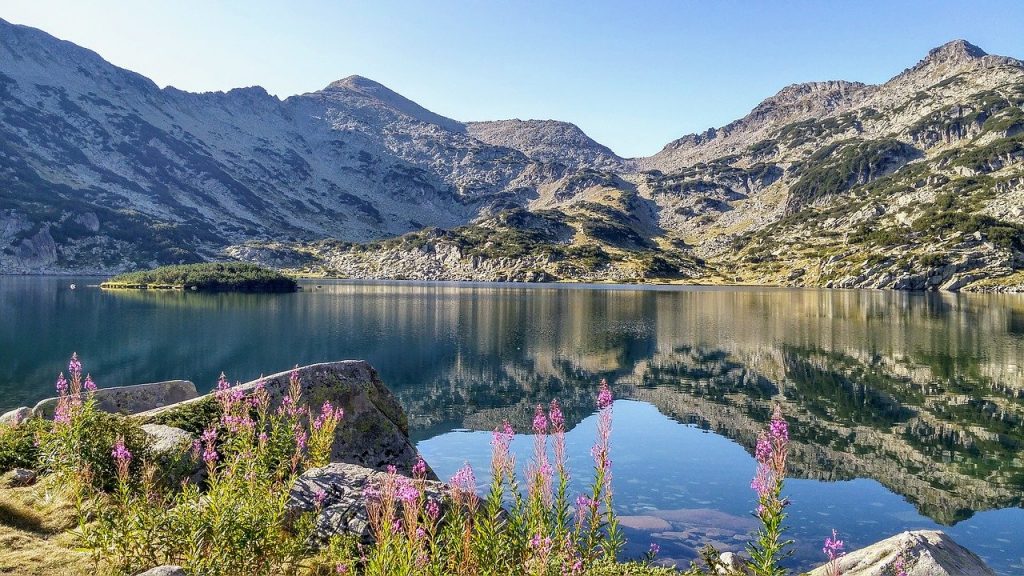
It is located in southwestern Bulgaria, with Vihren at an altitude of 2,914 m is the highest peak. One hypothesis is the mountain was named after Perun, the highest god of the Slavic pantheon and the god of thunder and lightning.
Another version is that the etymology of the range derives from the Thracian word Perinthos, meaning “Rocky Mountain”.
Stara Planina or Balkan Mountains
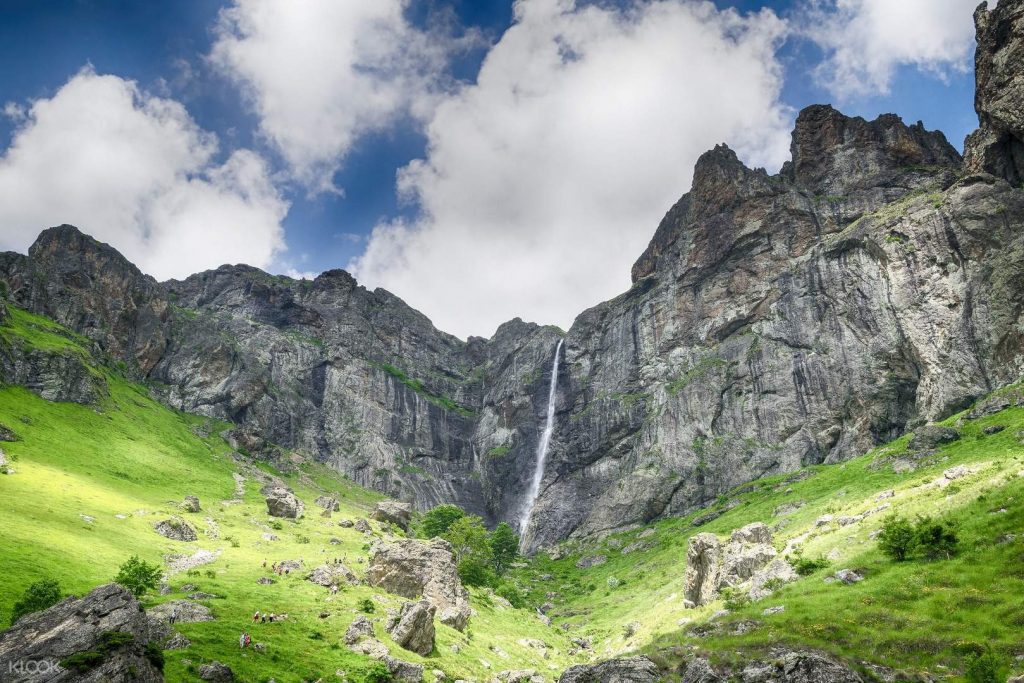
The Balkan range runs 557 km from the Vrashka Chuka Peak on the border between Bulgaria and Serbia eastward through central Bulgaria to Cape Emine on the Black Sea.
The Balkan Mountains are notorious with the most severe weather among the mountains in the country. This is determined by its role as a natural barrier between the cold continental climate of the north and the milder climate of south Bulgaria, touched by the Mediterranean air masses. The result is strong winds, storms, and rainfalls in summer and snow blizzards in winter.
The name of the Balkan Peninsula originates from this mountain chain whose highest point (mount Botev, 2376 m.) is named to a famous Bulgarian poet – Hristo Botev. One of the three national parks in Bulgaria, Central Balkan National Park, is placed in the central parts of the Balkan mountains.
Rhodope Mountains
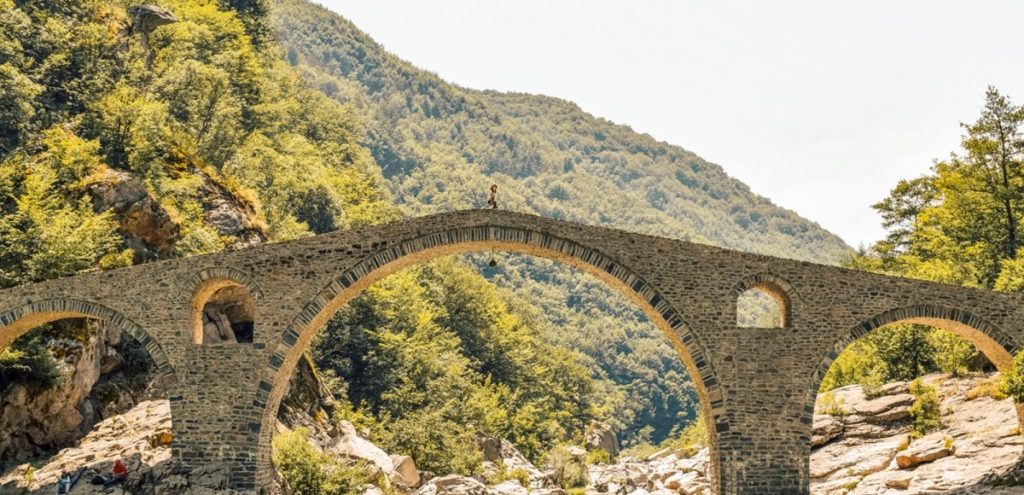
It is the largest mountain range in the country. With more moderate slopes, placed closer to the sea, these mountains are more welcoming for the people so they were populated from ancient times.
First by the Thracians, ancient tribes that inhabited these territories and left lots of remnants, then Romans build their amazing roads to cross the mountains on the way for their conquers. The Rhodope Mountains were the traditional shepherd’s summer pastures for ages, offering plenty of food for the animals and easy access to the areas with a softer climate near the Mediterranean sea when the snowfalls. There are still lots of villages and small towns throughout the region.
Strandzha Mountains
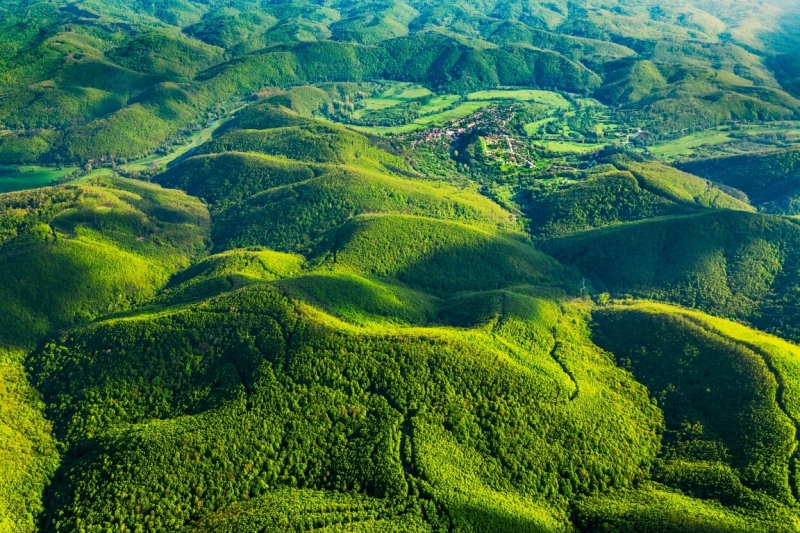
The climate of the area is considerably influenced by the Black Sea and is predominantly humid continental in the mountains and humid subtropical at the coast. Major rivers in the area are the Veleka (147 km or 91 mi long) and the border river Rezovska (112 km or 70 mi long).
Strandzha Nature Park, established in 1995 in the Bulgarian part of the massif, is the largest protected area in Bulgaria, embracing 1,161 km2 (448 sq mi), or about 1% of Bulgaria’s total territory.
Vitosha Mountain
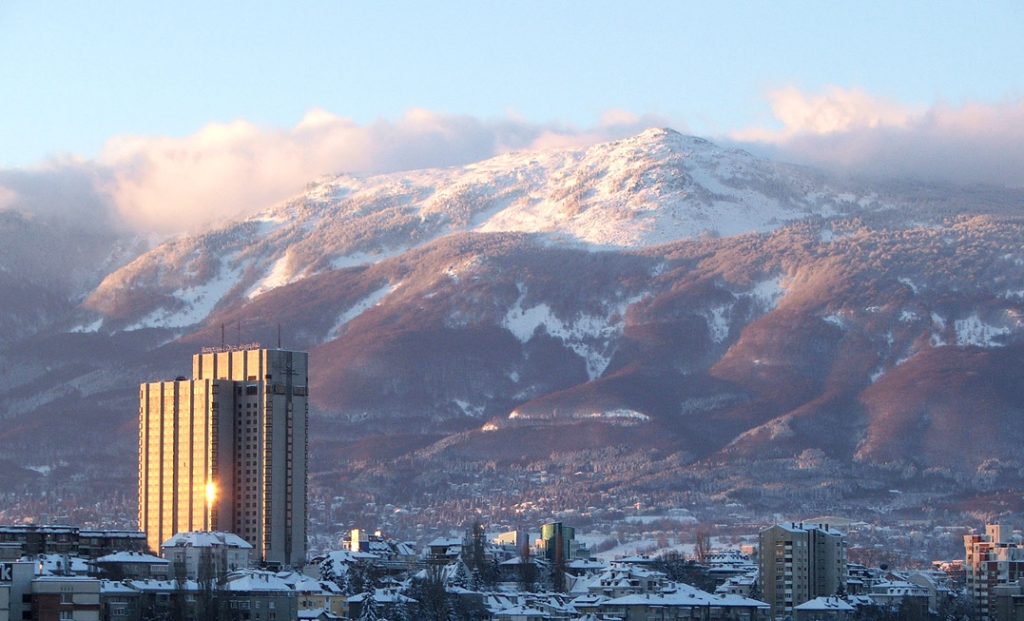
Vitosha is one of the symbols of Sofia and the closest site for hiking, alpinism, and skiing. Convenient bus lines and rope ways render the mountain easily accessible.
The territory of the mountain includes Vitosha nature park that encompasses the best known and most frequently visited parts.
Since the ancient times of the Thracians, a large population has always existed at the base of Vitosha. For the last four thousand years, the economy of this large settlement has always been connected, in one way or another, with the neighboring mountain. The name Vitosha comes from the two-peaked, twin ridge mountain.
As you can see, Bulgaria is much more than sunny beaches!
Bulgaria is an amazing country that has rich geography where can make everybody feel at ease, we see magnificent mountains and lakes, rivers, and the sea, fertile valleys, and mountains.